 |
Microsoft Exchange is #2 in Top 10 Email Servers
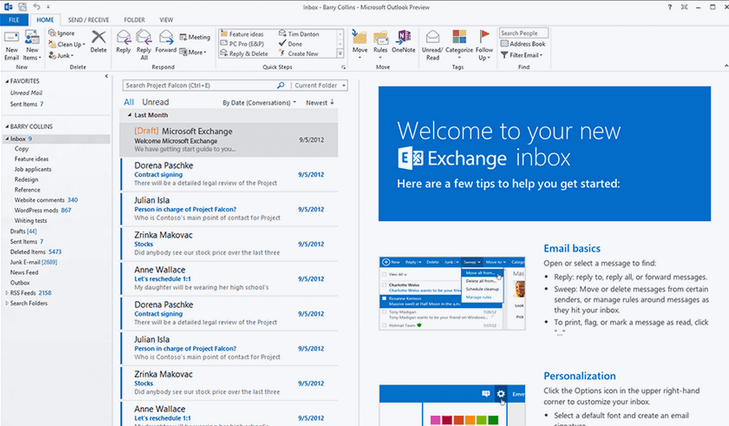
Microsoft Exchange Server is the server side of a client–server, collaborative application product developed by Microsoft. Exchange's major features consist of electronic mail, calendaring, contacts and tasks; support for mobile and web-based access to information; and support for data storage.
Positions in ratings
#2 in Top 10 Email Servers
Alternatives
The best alternatives to Microsoft Exchange are: Microsoft 365, GMail, Outlook

See also:
Top 10 Email Servers
Top 10 Email Servers
Latest news about Microsoft Exchange
2018. Microsoft released Exchange 2019, but no way to deploy it
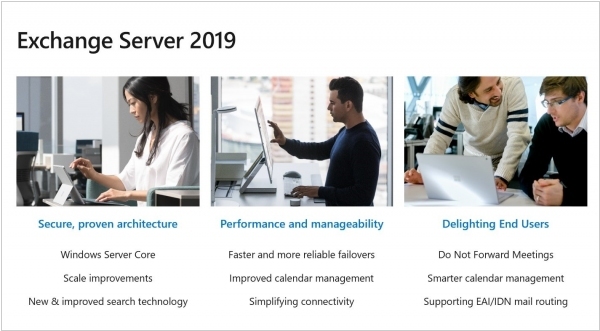
Microsoft has recently launched a fresh iteration of its email and collaboration server, Exchange 2019. Although the update is available for download, there is a hindrance—installation is currently impossible. The reason being that it exclusively operates on the server operating system Windows Server 2019, which is yet to be released. In terms of Exchange 2019's innovations, they primarily revolve around enhancing system performance. The latest version has the capacity to utilize up to 48 processor cores and 256GB of RAM, with optimizations specifically tailored for SSD drives. It is evident (and Microsoft openly acknowledges this fact) that Exchange is being developed with a primary focus on large and exceedingly large enterprises. Consequently, Microsoft aims to transition small and medium-sized businesses to their cloud-based offering, Microsoft Office 365, which delivers email server functionality as a service.
2010. Google Apps making Microsoft nervous
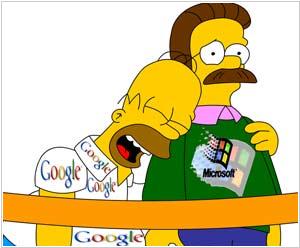
Recently, Google released the next anti-microsoft tool - Google Apps Migration for Microsoft Exchange, the plugin which allows you to easily move mail, calendars and contacts from Exchange to Google Apps. Last year they released the utility that syncs Outlook with Google Apps, but now you can import data directly from the Exchange server. Previously, Microsoft just ignored such events, or commented that Google Apps - is just a toy that no serious company will use. But Google's constant pressure is making them nervous. Microsoft recently launched the channel on Youtube, which contains videos explaining why MS Office products are better than Google's. For example, here's the video Exchange vs GMail: ***
2009. Exchange 2010 - unified messaging in the Cloud

Microsoft officially released the new version of its enterprise email server Exchange Server 2010. It's desktop client Outlook 2010 will appear only next year together with other Office 2010 applications. What is the most interesting about Exchange 2010? First, thanks to Windows Server 2008 R2 and Windows 7 (details here), and some new features in the new version, Exchange 2010 is now completely adopted for the cloud deployment. Of course, Hosted Exchange 2007 has been already provided for some years, but the latest version is much more secure, reliable and suitable for administration, when installed on the remote server (or in data-center). ***
2008. How much does Exchange really cost?
A lively debate is unfolding in the comments section of an eWeek article by Clint Boulton, discussing Serena Software's decision to switch from Microsoft Exchange to Google Apps. The focus of the discussion revolves around the true cost of running Exchange. Serena claims that replacing Exchange with Google Apps will reduce their expenses from $1 million to $250,000 annually. Commenters question how an 800-employee company could spend such a substantial amount on email servers. This debate sheds light on how people evaluate the relative costs of on-premise software versus cloud-based alternatives. One commenter provides a breakdown of Exchange costs, while Serena's VP of corporate communications highlights the additional expenses associated with spam filtering, security, archiving, and disaster recovery. Despite the explanations, the discussion continues, with Exchange hosters suggesting they can offer equivalent services at a lower cost. The conversation underscores the ease with which the true cost of an on-premise application can be underestimated, including not only software and hardware expenses but also the often-overlooked costs of managing patches, upgrades, and user expectations. Serena's strategic commitment to becoming a SaaS vendor aligns with its interest in promoting the cloud narrative. However, the transition to Gmail may not be as abrupt as the eWeek story suggests, as Serena plans to continue using SharePoint for collaboration and may maintain Exchange until all users have migrated. Amidst the detailed arguments, the core message remains clear: Google Apps is significantly cheaper than Microsoft Exchange for corporate email systems, and those who argue otherwise underestimate the true costs of running Exchange on-premise.
2006. Microsoft Exchange 2007 bets on unified messaging
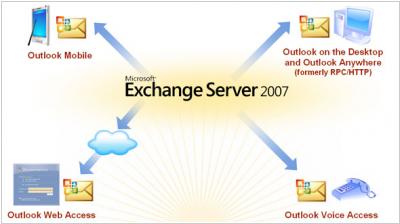
Today, Microsoft has officially announced the latest release of its Email collaboration solution, Exchange Server 2007. The primary focus of this new version is unified messaging, enabling employees to handle e-mails, voice mails, and faxes within a single interface. Moreover, with the integration of MS Office Communications Server, the advanced technologies of text-to-speech and voice recognition now allow users to access their mailboxes and listen to new email messages. It's important to note that these enhanced functionalities are exclusively available in the more expensive Exchange Enterprise edition. Additionally, the new Exchange version offers built-in antivirus and antispam protection, backup and data replication tools (significantly expanding mailbox capacity), and introduces Outlook Anywhere, a feature that enables connecting Outlook to the Exchange server via the Internet. Furthermore, it's worth mentioning that Exchange 2007 exclusively supports 64-bit architecture.
2003. Exchange Server 2003 becomes more specialized and mobile
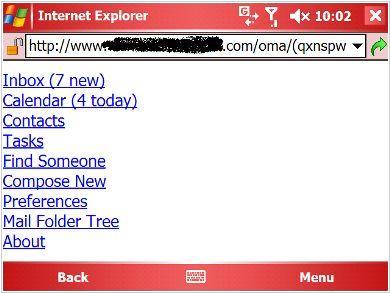
Microsoft has recently launched the latest version of its email server, Exchange Server 2003. This release brings significant changes to the system, leading it to be appropriately termed as an "email server." Microsoft has made the decision to distribute some of its functionalities across other products. The built-in Exchange messenger has transitioned to Microsoft Office Live Communications Server, while the web-conferencing server has moved to Live Meeting. Furthermore, Microsoft now recommends utilizing the intranet portal Sharepoint for file sharing, although Exchange public folders are still included. As a result, Exchange Server will primarily focus on managing email, contacts, calendars, and tasks. On the other hand, Exchange Server 2003 has gained new features from the mobile server called Microsoft Mobile Information Server. It introduces Outlook Mobile Access, a web client for mobile devices, and server-side Exchange ActiveSync, enabling users to synchronize their mobile email clients with the server. This empowers users to conveniently work with their email, calendars, and tasks on their mobile devices.
2003. Lotus unfolds for smaller customers
IBM has announced new versions of its Lotus Domino server software, specifically targeting smaller businesses and aiming to convert customers from Microsoft's Exchange. The new packages, Lotus Domino Collaboration Express and Lotus Domino Utility Server Express, offer e-mail and collaboration software with adjusted license terms and technical enhancements suitable for smaller businesses. These packages are designed for companies with 100 to 1,000 employees who haven't yet adopted other Lotus products. By providing an affordable and feature-rich collaboration solution, IBM aims to capture the attention of businesses that could benefit from such tools but have yet to adopt them. The packages are compatible with various operating systems and e-mail client software, providing broad software compatibility. IBM is actively working to revamp its Lotus division by integrating existing products and developing new software packages to expand its range. The pricing for Lotus Domino Collaboration Express starts at $89.25 per user for competitive e-mail product upgrades or $119 for new purchases, while Lotus Domino Utility Server is priced at $5,000 per server processor. Both packages are currently available.
2000. MS Exchange 2000 Server gets inbuilt messenger
Microsoft has introduced the latest edition of its collaboration solution, Exchange 2000 Server. Unlike its previous version, this release no longer incorporates an internal directory service. Instead, Exchange 2000 Server relies entirely on the external directory service known as Windows Active Directory. Consequently, many users may encounter significant challenges during the upgrade process. Additionally, Exchange 2000 Server includes a built-in messaging platform called Exchange Instant Messaging, which supports various IRC clients. It also offers a web-conferencing service called Exchange Conferencing, compatible with Outlook 2000 and NetMeeting. Another noteworthy addition in Exchange 2000 is the Web Store feature, a file system that enables efficient organization and simplified searching for unstructured data within Exchange, such as web pages, documents, and email messages.
1999. Lotus is losing ground to Exchange
According to a recent IDC report, there is a shift in leadership within the groupware market. In the first half of this year, the number of Microsoft Exchange licenses sold (8.1 million) has surpassed the number of Lotus Notes/Domino licenses sold (7.4 million). Novell GroupWise retains its third-place position, but with a significant gap (2.69 million). Lotus had been a strong frontrunner in the groupware market until last year. However, ongoing delays in the release of the new version of Lotus Notes/Domino 5 played a major role in many new customers choosing Microsoft Exchange instead. It is worth noting that Lotus Notes still maintains a lead over Exchange in terms of the number of licenses sold in Europe and Asia, and it still boasts a larger client base accumulated over the years.
1997. Microsoft Exchange 5.0 adds web-access, new desktop client MS Outlook
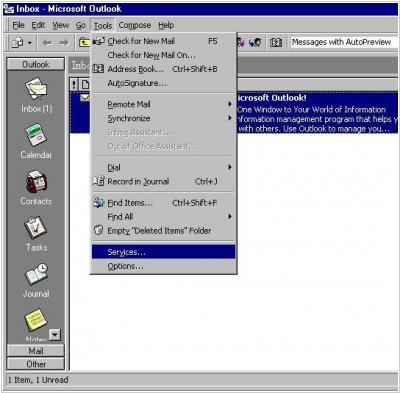
The latest release of Microsoft's mail server, Exchange Server 5.0, introduces the Exchange Web Access, a web interface that allows users to access Exchange information through an internet browser. It's important to note that acquiring a client license is necessary to utilize this feature, regardless of whether or not you have a mailbox on the server. Alongside the new web client, Exchange Server now offers a desktop client, MS Outlook 97, which is included in the MS Office 97 suite and replaces the Schedule+ calendaring application and Exchange Client email client. Additionally, the new version of Exchange brings support for messaging protocols SMTP and POP3, as well as the directory access protocol LDAP. The standard version of Exchange Server is available for a server license price of $999.
1996. Microsoft unveiled Exchange Server
Following an extensive two-year development cycle, Microsoft has officially launched its email server, Exchange, aiming to replace Microsoft Mail and compete with dominant players such as Lotus Notes and Novell GroupWise in the groupware market. Although Microsoft has successfully migrated 60,000 corporate clients to Exchange during closed testing, this is only a fraction when compared to the substantial customer bases of 15 million Lotus Notes users and 5.5 million GroupWise users. Exchange holds an advantage over its competitors with its ability to synchronize folders with mobile devices. Furthermore, the Microsoft Exchange client is already integrated into Windows 95 by default. Recognizing the need for migration assistance, competitors have developed utilities to facilitate the transition from Microsoft Mail to Lotus Notes and GroupWise. With the requirement for MS Mail users to migrate to a new product, they now have three viable options to consider.