 |
Skype is #1 in Top 10 Video Calling apps

Skype is a software application that allows users to make voice and video calls and chats over the Internet. Calls to other users within the Skype service are free, while calls to both traditional landline telephones and mobile phones can be made for a fee using a debit-based user account system. Skype has also become popular for its additional features which include instant messaging, file transfer, and videoconferencing. Skype alternative for enterprise is called Skype for Business.
Positions in ratings
#1 in Top 10 Video Calling apps
#1 in Top 16 VoIP services
Alternatives
The best alternatives to Skype are: Zoom, Microsoft Teams, Google Chat, WhatsApp, Discord, Facetime, Google Voice, Google Meet
Latest news about Skype
2020. Skype has a Zoom-like video call function called 'Meet Now'
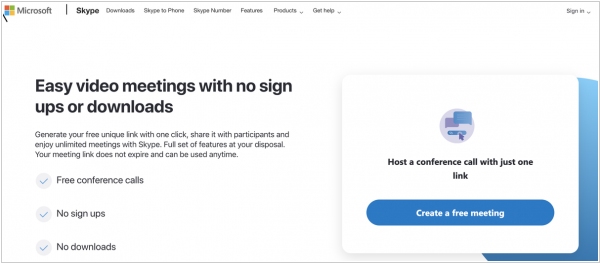
Skype made a notable comeback by reminding the world about its presence through a tweet. Surprisingly, Skype offers a video chat feature similar to Zoom, known as Meet Now, which doesn't necessitate having a Skype account or the app. With Skype Meet Now, users can generate a meeting URL to share with participants. While it is user-friendly on the web-based client, selecting the option to open the meeting in the Skype app may encounter issues. This brings us to the observation that Skype seems to have missed out on the surge in popularity of video calling platforms.
2019. Skype added features for work with important messages
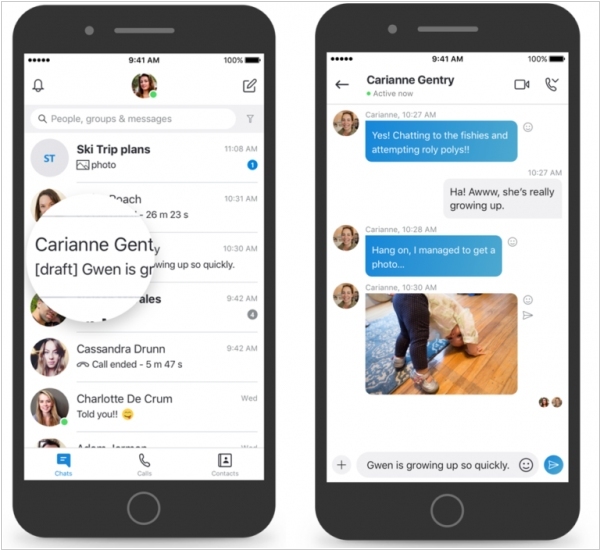
Skype primarily serves as a platform for video communication, but it also aims to establish itself as a versatile messaging application. While competing with established players like WhatsApp and Viber may seem challenging, Skype is exploring new opportunities. In its latest update, the developers introduced some unconventional features for a messaging app: drafts and bookmarks. Drafts enable users to save partially composed messages, allowing them to return to them later and complete them. Bookmarks, on the other hand, allow users to save received messages for quick retrieval at a later time. These features specifically target important messages, suggesting that Skype may be seeking to carve out a new niche that falls between traditional messengers and email. Such functionality could prove valuable for business users.
2019. Skype launched screen sharing on iOS and Android
Skype has recently announced an update to its mobile application, introducing a screen sharing feature for both iOS and Android users during calls. This functionality offers various practical applications, such as sharing presentations or providing remote technical assistance. To access this feature, Skype users can simply tap the newly added "..." (more) menu within the app, where other recently launched features like call recording and subtitles can also be found. Additionally, this mobile release of Skype includes a redesigned calling screen that enables users to dismiss call controls with a single tap. Tapping again removes all controls, allowing the video call itself to take center stage, while another tap brings back all the controls.
2019. Skype can now blur the background during video calls
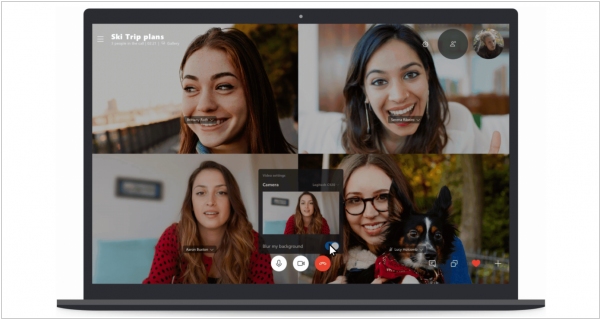
Skype has introduced a new feature that is likely to enhance its appeal to users. This feature is the screen-blurring functionality, designed to conceal any untidy or unwanted background details during a call. It allows users to hide their messy rooms or other elements they prefer not to display to the other party on the call. Skype stated that this feature utilizes artificial intelligence to maintain the caller as the main focus, similar to the blurring feature added to Microsoft Teams in the previous year. Moreover, it can detect features such as hair, hands, and arms. The feature is gradually being rolled out to Skype for desktop, web, and mobile platforms, although it may not be compatible with all devices at present. Users can enable it either in Skype's settings or by accessing the video call button within the service.
2018. Skype and PowerPoint got real-time subtitles

PowerPoint and Skype have announced the upcoming introduction of real-time captions and subtitles in 2019. This new feature is designed to provide accessibility for individuals who are deaf or hard of hearing, enabling them to read the spoken words during PowerPoint presentations or video calls on Skype. Moreover, the subtitles offer the capability to include presentation translations. The live captions and subtitles will support 12 spoken languages and display on-screen in over 60 different languages. Presenters will have the ability to customize the appearance of the subtitles to align with their presentation's visual style, and the speech recognition technology will adapt to provide more accurate terminology based on the context. In Skype, the subtitles will be available during one-to-one video calls and will automatically scroll on the screen. Microsoft has also mentioned that they are working on providing additional viewing options, including the ability to scroll through the captions in a side window.
2018. Skype rolls back its unwanted redesign
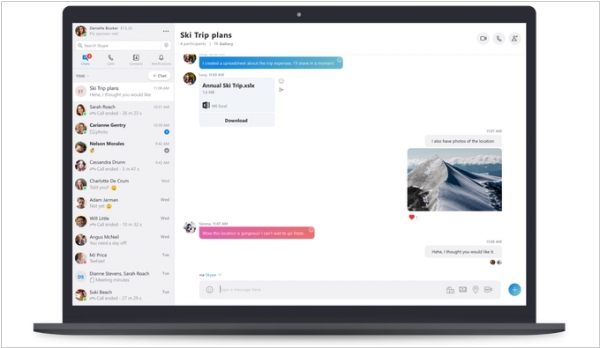
Last year, Skype underwent a vibrant makeover, taking inspiration from Snapchat and incorporating its own version of "stories." However, the redesign faced significant criticism. Microsoft has now acknowledged that the changes did not resonate with users and have decided to adopt a simpler navigation model. In the mobile app, there are only three buttons at the bottom: Chats, Calls, and Contacts, while Highlights and Capture have been removed. The desktop version of Skype has also undergone changes, with Chats, Calls, Contacts, and Notifications now positioned at the top left of the window, aimed at facilitating familiarity for long-time Skype users. Moreover, the app's excessive use of color has been toned down, and a Skype "Classic" blue theme has been introduced, optimized for contrast and readability. These adjustments aim to improve the user experience and address the feedback received from the community.
2018. Skype 8.0 adds HD video, encryption & call recording
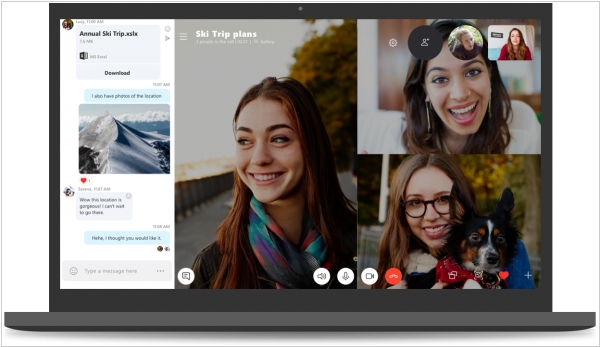
Microsoft is introducing Skype 8.0 version for desktop, which brings several new features and enhancements. Users can now enjoy high-definition (1080p) video calls, supporting up to 24 participants, providing a more immersive communication experience. Additionally, the update includes the introduction of @mentions, inspired by Twitter, allowing users to easily direct their messages to specific individuals in group conversations. In the coming months, Skype will also introduce end-to-end encryption for audio calls, text messages, and shared files like images, audio, and video. This enhanced security feature will utilize the industry-standard Signal Protocol, ensuring that the communication remains confidential and protected. Furthermore, messages and notifications from these encrypted conversations will be hidden in the chat list to maintain privacy. Skype is also introducing a built-in call recording feature, enabling users to record their calls directly in the cloud. It's worth noting that all participants in the call will be notified when a call is being recorded, promoting privacy and complying with legal requirements. These new updates aim to enhance the overall Skype experience, providing users with improved video quality, privacy features, and convenient call recording capabilities.
2018. Skype adds new feature for recording video calls

Microsoft has introduced a new feature called "Skype for Content Creators," which enables desktop users to make and record calls using the Skype desktop software. These recorded calls can then be streamed live or imported into other applications for further editing before being published. This feature is particularly beneficial for digital broadcasters, streamers, and vloggers as it eliminates the need for expensive studio equipment when creating videos, podcasts, or live streams. While it is especially useful for recording video chats with remote guests, such as in a weekly call-in show, it can also be utilized for live streaming calls on other platforms like Facebook, Twitter, or YouTube.
2017. Skype introduced Professional accounts
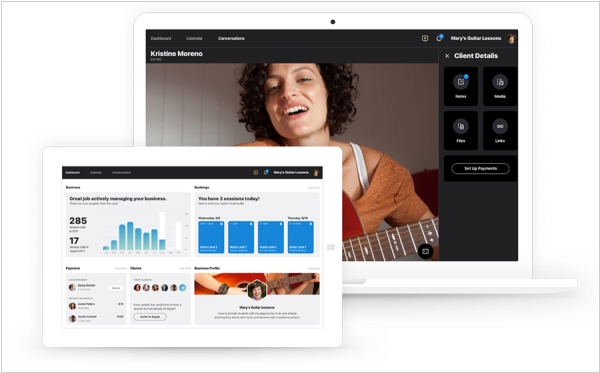
Skype has unveiled a new account type called the Professional Account, catering specifically to freelancers and online entrepreneurs who offer services such as online lessons, tutoring, and consulting. The upcoming desktop client for the Skype Professional Account, set to be released in preview mode in the United States, introduces a range of powerful features that significantly streamline online business operations. In addition to conducting client meetings as usual on Skype, you can now conveniently schedule appointments, accept payments, and maintain notes—all within a single platform. During the preview phase, you can enjoy these business capabilities for free. Whether you're a French tutor or a yoga instructor, you'll be able to effortlessly manage lesson bookings, payment processing, and lesson delivery from a unified interface. Furthermore, we have enhanced the profile page to enhance your online presence and have even included a dedicated website for your small business directly within Skype. Your contacts will have access to essential information like your operating hours and business offerings. All these features seamlessly integrate with one another, allowing you to, for instance, send a payment request alongside a booking.
2017. Skype radically redesigned mobile and desktop apps
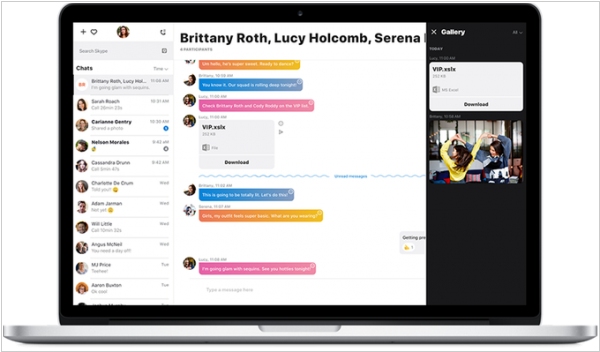
In June, Microsoft introduced a completely overhauled version of its Skype app, placing a stronger emphasis on media sharing and incorporating social expression tools such as emoji, reactions, and even a stories feature similar to Snapchat. This enhanced experience is now being rolled out to desktop users. Group chats now feature vibrant colors, allowing emojis to be used for reactions in both video calls and text conversations. However, the new Skype desktop also introduces some practical additions alongside its social app features. For instance, a media gallery has been added on the right side of group chats, making it more convenient to locate shared files such as documents, spreadsheets, photos, and other media that have been posted within the group.
2016. Skype adds real-time translation to all VoIP calls

In a significant development, Skype introduced its integrated Translator feature last year, enabling real-time speech translation. Initially, this feature was only available in video chats, but the latest version brings the capability to make calls worldwide and have your conversations instantly interpreted, regardless of whether the other person is using a traditional rotary phone. When initiating a call, users simply need to select their preferred language, and the tool will handle the rest. The recipient will hear a message stating that the call is being recorded and translated through the service, which becomes evident once the conversation begins. The new feature will be initially accessible to members of the Windows Insider Program. Presently, the Translator supports nine spoken languages: English, Spanish, French, German, Mandarin Chinese, Italian, Brazilian Portuguese, Arabic, and Russian.
2016. Skype now allows to make calls without registration
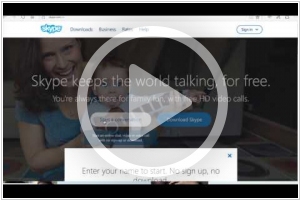
In the previous year, Skype introduced the feature of inviting individuals without a Skype account to participate in chats or video calls. Now, it is even possible to initiate chats and calls without requiring registration. All you need to do is visit Skype.com and select "Start a Conversation." By entering your name, a chat will be created with a unique link that you can share with your friends or colleagues. They are not obligated to have an account either. You can invite up to 300 people for a text chat or up to 25 individuals for voice or video calls. It's important to note that these conversations will only remain active for 24 hours, and you won't have access to the chat history beyond that time frame. Additionally, functionalities like Skype Translator or calling phone numbers are still exclusive to users with a Skype account.
2016. Skype gets Bots
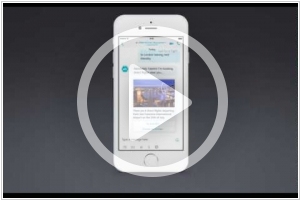
In the latest release of Skype for Windows 10, Microsoft has incorporated a range of Skype bots, which are automated chat assistants previously introduced in a restricted preview earlier this year. These new bots offer various functionalities such as assisting with travel arrangements, finding event tickets, gathering information from other applications and services, and even providing entertainment. One notable example is the Skyscanner Bot, which allows users to search for flights for individuals or groups, obtain pricing details and route options, and ultimately provides a convenient booking link for completing the reservation.
2016. Microsoft launched free Skype Meetings for small business

Microsoft has introduced Skype Meetings, a new conferencing tool tailored specifically for small businesses. Unlike the comprehensive Skype for Business product, which supports meetings with up to 250 participants and integrates seamlessly with Outlook, Word, and PowerPoint, Skype Meetings offers limited features. It enables PowerPoint collaboration with screen sharing and includes screen sharing capabilities. Initially, video calls are restricted to a maximum of 10 people for the first two months, which later decreases to three participants. Skype Meetings allows participants to join from any device using a personalized URL and leverages the same technology as Skype for Business, providing access to features like head tracking that keeps faces centered on the screen during video calls.
2016. Skype voice and video calls now work plugin-free in Microsoft Edge
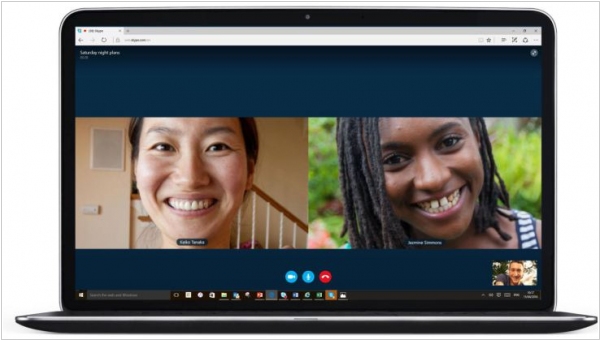
Microsoft is implementing changes to make Skype plugin-free when accessed through the browser, specifically in Microsoft Edge. However, other browsers such as IE, Chrome, Firefox, and Safari will still require plugins as before. This new capability applies to various Microsoft services, including Outlook.com, Office Online, OneDrive, and Skype for Web, enabling real-time voice, video, and group calling without the need for plugins when using Microsoft Edge. Microsoft has been actively working on enhancing accessibility to Skype chats, even for users without an account. Skype for Web served as a convenient solution for connecting these invitees to chat sessions, but the requirement to install browser plugins could impede the experience. With the latest update, users on Edge can simply click a link and start chatting without any additional plugins.
2016. Skype for Web now supports calling to mobile phones, landlines
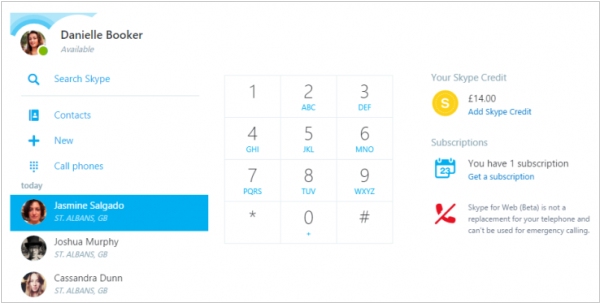
The browser-based version of Skype for Web is receiving a range of new features that align it more closely with its desktop and mobile counterparts. One significant addition is the ability to make calls to mobile phones and landlines directly from the browser. Similar to other platforms, this functionality requires a subscription or Skype credit. Once signed in, users can navigate to the phone call tab, select a destination, and initiate the call. Additionally, the web version now enables users to easily include non-Skype users in conversations, introduces notifications for improved communication, and allows users to watch YouTube videos within the Skype for Web interface. Please note that while the HTML tags and links were retained, they may not be properly rendered in this plain text format.
2016. Skype discontinues its video messaging app Qik
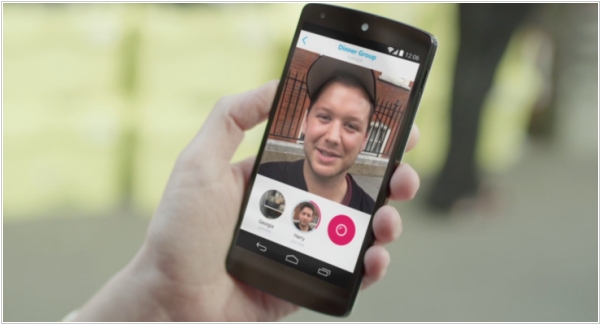
Skype Qik, Microsoft's endeavor to create a streamlined mobile application for video messaging, will be discontinuing its services. Introduced in the autumn of 2014, the app targeted a distinct user base compared to the more comprehensive Skype application. Instead of providing real-time chat, screen sharing, and audio/video calling, Qik focused solely on asynchronous video messaging. Although the app shared its name with the mobile video startup acquired by Skype in 2011, the technologies employed were entirely different. The earlier version of Qik revolved around live streaming, whereas the new Qik enabled users to communicate by swiftly sending video messages. However, as mentioned in a post on the Skype Developers' blog, many of Qik's concepts have now been integrated into Skype's primary application, including video messaging. Due to Skype's adoption of Qik's core functionality, the Qik app is being discontinued.
2016. Skype integrated with Slack

The latest integration of Slack now offers team members the convenience of initiating Skype voice or video calls directly from within the Slack application. Once the integration is installed, starting a Skype call is as easy as typing "/skype" into the Slack chat interface, which will generate a join link. On desktop devices, a web browser plugin is all that's required, while on mobile devices, users need to download the Skype mobile application on their smartphones. Slack team members have the option to join calls as guests on a computer or sign in using their Skype name or Microsoft account credentials.
2016. Skype adds free group video calls to mobile apps
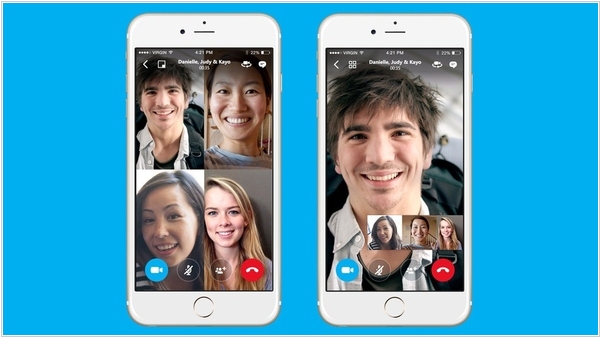
Skype has made an exciting announcement, introducing free group video calling for Android, iPhone, iPad, and Windows 10 mobile devices. While this feature has been available on desktops for both Mac and PC users for a couple of years, it was not yet accessible on mobile devices. With the latest update, Skype users will be able to engage in video calls with up to 25 participants at no cost. Although group video calls have been supported by Skype previously, the functionality was limited to subscribers of Skype for Business, while the free apps only offered group audio calls.
2015. Skype for Web is available globally
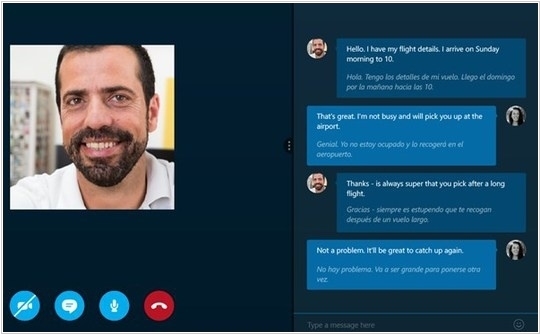
Skype has expanded the availability of its web-based client beta to a global audience. This comes after its initial launch in the United States and United Kingdom earlier this month. Notably, Skype for Web now offers support for Chromebook and Linux platforms, enabling users to engage in instant messaging communication (voice and video functionalities require a separate plug-in installation). To access the Skype for Web Beta, simply visit web.skype.com or Skype.com and log in when prompted. From my limited experience with the beta version, it performs as expected. The inclusion of IM support for Chromebooks enhances its utility for individuals seeking lightweight and cost-effective travel options while staying connected from any desired location, even without their personal computers.
2014. Microsoft launches Skype for Web
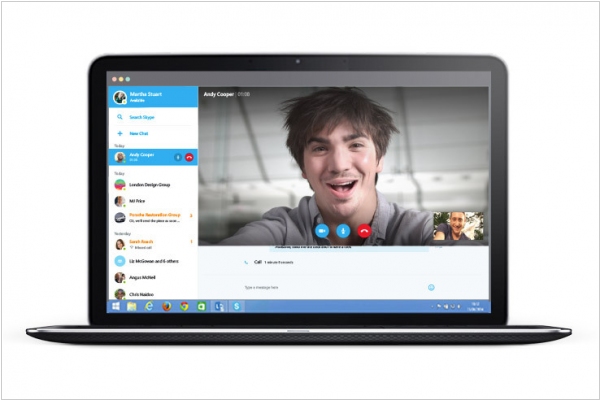
Skype has introduced a new beta version that brings its instant messaging, voice, and video chat service directly to the browser. Currently, users need to install a small plug-in to access voice and video calls, but Microsoft has promised to implement Real-Time Communications (RTC) support, enabling plug-in-free usage in the future. Skype for Web is compatible with Chrome (Windows), Internet Explorer, Firefox, and Safari. Although Chromebooks and non-Windows platforms can utilize Skype for Web for instant messaging, voice and video capabilities are not yet available for them due to the plugin's configuration limitations. Previously, Skype had already made its way to the web through a plug-in for Outlook.com, which was globally launched earlier this year. This plug-in facilitated text, video, and voice chat within the company's web-based email inbox service.
2014. Microsoft launched video messaging service Skype Qik

Microsoft has introduced a new group video messaging application called Skype Qik. This software is compatible with iPhones, Android devices, and Windows Phones, making it a cross-platform solution. With Skype Qik, users can exchange both single and group video messages, allowing any member of the group to add others by using their phone number. To record a video message, all it takes is a simple press of the large pink button within the app. These messages remain accessible for up to two weeks before being automatically deleted, although users also have the option to manually delete them. In the case of contacts who don't have Skype Qik installed, they will receive a text message explaining how to install the app and join the conversation. Additionally, the application supports the creation and sending of short messages known as Qik Fliks, which are five-second animated GIFs that can be saved for future use.
2014. Skype 7 refocuses on chat

Skype has unveiled new versions of its desktop clients: Skype 7 for Mac and a preview of Skype for Windows, both sporting a unified design. The desktop version of Skype now mirrors the mobile experience, which may require some adjustment, but the notable enhancements go beyond aesthetics. One such improvement is the ability to instantly view shared image files within the chat window, eliminating the need to click on an icon for viewing or previewing. The Windows version features increased spacing between the contacts list and the chat section, along with message previews for unread content, allowing users to quickly glance at the messages without switching between chats.
2014. Microsoft kills MSN Messenger for Skype

Microsoft has made the official decision to discontinue its 15-year-old instant messaging platform, Windows Live Messenger (previously known as MSN Messenger). In 2012, Microsoft announced its intention to shut down Windows Live Messenger and transition users to Skype. However, the service remained active in China until recently. Initially introduced in 1999 as Microsoft's response to the widely used AOL Instant Messenger, MSN Messenger began with fundamental instant messaging capabilities but quickly evolved to include additional functionalities like photo messaging, screen-sharing, and voice and video chat.
2014. Skype 5.0 for iPhone looks cooler, works faster
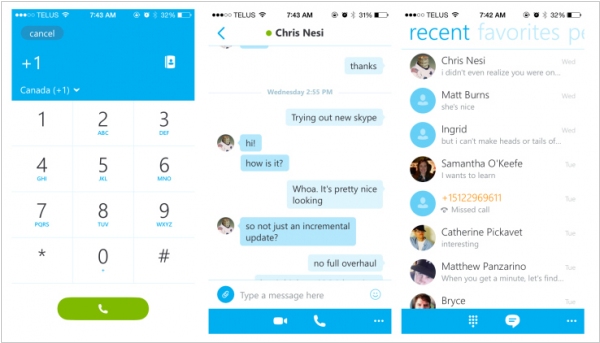
Microsoft has introduced Skype for iPhone 5.0, featuring a significant redesign and performance enhancements. The updated app now bears a striking resemblance to the Windows Phone interface. It incorporates a ribbon navigation bar at the top, while the bottom houses a pair of buttons strategically positioned for easy access to the most commonly used features. Notably, the performance improvements are noteworthy, with minimal lag and smooth animations that seamlessly address any slight delays. The revamped Skype client simplifies the initiation of group chats and ensures notification synchronization across devices, even if the recipient is not currently logged into Skype. This renewed emphasis on text messaging aligns with the prevailing trend where both startups and established companies aim to establish their messaging app as the go-to solution for all communication needs.
2014. Skype makes group video calls free

Previously, group video calling on Skype was exclusively offered as a premium feature, requiring a subscription that cost $8.99 per month. However, the latest update brings good news, as this functionality will now be available for free. Users will be able to organize unlimited online meetings with up to 10 participants without any cost. Initially, the free group video calling feature will be accessible on the desktop version of Skype for Windows, Mac, and Xbox. Microsoft also has plans to extend this feature to the mobile versions of Skype on iOS, Android, and Windows Phone in the near future. The provided video demonstrates how to initiate a group video call. It is worth mentioning that one of Skype's competitors, GoToMeeting, recently introduced free video chat for up to 3 participants.
2014. Skype for Outlook.com now available worldwide

The ability to make video calls using Skype directly from your web browser is now accessible to all Outlook.com users, expanding beyond its previous availability limited to the US and UK. Essentially, this entails utilizing the web version of Skype, although it does not eliminate the need to install software on your computer. You will still be required to install the browser plugin. However, the advantage is that you no longer need to create a separate Skype account; your universal Microsoft account is sufficient. Additionally, Outlook.com has enhanced its capabilities by offering HD video calls. This signifies Microsoft's efforts to catch up with Google's GMail, which already features video calling through Google Hangouts. It is worth noting that Google's service has the advantage of supporting free group video calls for up to 10 participants.
2013. Skype gives free group videochat and screen-sharing for 2014

Occasionally, the Skype (or Microsoft) team ventures into peculiar projects and attempts to integrate them with Skype. For instance, about a year ago, they made an effort to launch the social network Skype In The Workspace. More recently, they introduced the Skype Collaboration Project earlier this month. This project serves as a platform for creative individuals to engage with the industries they are passionate about, find inspiration, and so on, including some mentions about Victoria Beckham and other details. However, this endeavor did yield a significant benefit: to bring attention to the site, Skype is currently running an exciting holiday promotion. Visitors who explore the Skype Collaboration Project and provide their email address can enjoy premium account features for an entire year. These features include group video chat, screen-sharing, and an ad-free experience.
2013. Skype Video Messaging is generally available for free
Contrary to expectations, Skype has decided not to restrict video mail, which was initially introduced as a premium feature. Today, Skype made an announcement stating that this new functionality has exited the beta phase and is now accessible to all users free of charge. Moreover, video messaging is now supported on the Windows client and Blackberry app, expanding its availability beyond Mac, iOS, and Android platforms. Unfortunately, Windows Phone users are still unable to access this feature. To learn how to utilize Skype Video Messaging, please watch the accompanying video.
2013. Skype comes to Outlook.com

Finally, Microsoft has commenced the integration of Skype into its products. Its main competitor, Google, has long provided chat functionality with voice and video in its email service, GMail. Therefore, it would be a missed opportunity for Microsoft not to incorporate similar features into Outlook.com. And that's precisely what they have done. However, at present, this feature is only available in the UK, with availability for the rest of us expected in a few weeks. To enable chat, voice, and video calls in your Outlook.com inbox, you will need to install the browser plug-in (for Internet Explorer, Chrome, or Firefox), just like in GMail. You can use Skype with your existing Microsoft account, eliminating the need to create a new account. If you already have a Skype account, you can link it to your Microsoft account, and your Skype contacts will appear in your contact list, allowing you to call or message them directly from Outlook.com.
2013. Promarket - industrial classifieds on top of Skype

Recently Skype started the strange attempt to create a business social network (or community) Skype In The Workspace. Now another startup Promaket is trying to create something similar. And it looks like their version make more sense. At least, in Promarket the communication space is divided by industry and focused on buy/sell transactions. For example, if you are selling fish, you enter the Fish chat and spam other fish-traders with your offers, or read their offers. Chat can be filtered by different keywords or by subject (buy / sell). And if you find an interesting offer - you can contact its author via private chat or make a Skype call. ***
2012. Skype In The Workspace - Microsoft wants to make a social network based on Skype
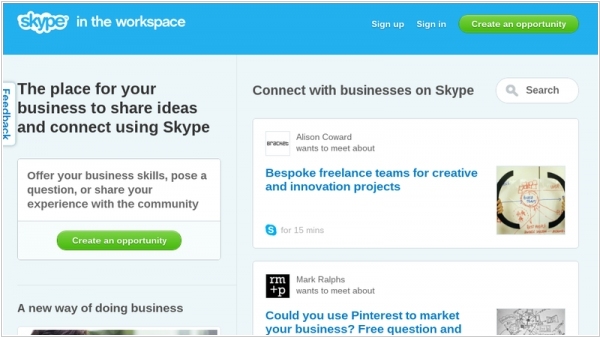
Looks like Microsoft has an overload of ideas on what to do with Skype, and these is no one who can kill these ideas in time. The new service called Skype In The Workspace is a combination of social network and a freelance marketplace for entrepreneurs and small businesses. There you can post opportunities (or projects) and invite people to discuss them. Of course, the discussions are hold in Skype. According to Microsoft, the service has been tested for 6 months, and now it comes out of beta. But it looks very primitive, incomplete and still haven't gained any popularity among uses. Although, there is one interesting thing in it - the authorization. It's possible not only via Skype ID, but also using your LinkedIn credentials (and no other options). So, this is one more addition to rumors that Microsoft may acquire LinkedIn. ***
2012. Microsoft replacing Windows Live Messenger with Skype
The illustrious 12-year journey of Microsoft's Windows Messenger is drawing to a close as the company initiates the transition of its 100 million Windows Live Messenger users to Skype, a platform currently boasting 280 million users. The latest iteration, Skype 6.0 (available for Windows and Mac), already allows users to log in using their Microsoft accounts, seamlessly importing their Messenger contacts. Now, the question arises as to whether the communication quality in Skype will be affected by this significant influx of users. Some users have already reported a decline in Skype's performance in recent months, possibly due to Microsoft's efforts to integrate Skype into its product ecosystem. It is worth noting that Microsoft acquired Skype for a staggering $8.5 billion last year. Interestingly, it was revealed that one of the driving forces behind this acquisition was Joe Williams, a senior executive responsible for Microsoft Lync, who believed that Skype posed a threat to Microsoft's enterprise business.
2012. Skype + Windows Phone 8 = ideal communication device
Skype has historically faced limitations as a comprehensive communication app for smartphones. Initially, it lacked multitasking capabilities, followed by issues with functioning in sleep mode, and eventually encountered battery drain concerns. However, all these challenges have been addressed in the new Windows Phone 8 operating system, which was recently released. While Microsoft chose not to integrate Skype into the desktop version of Windows 8 to avoid potential antitrust issues, they fully integrated Skype into the Windows Phone OS at the hardware level. The app seamlessly integrates with phone contacts and enables users to receive calls just like regular GSM network calls, provided there is an internet connection. Therefore, when purchasing a Windows Phone, users are not only acquiring a mobile computer but also an optimal platform for free or affordable communication.
2012. Microsoft created Skype for Windows 8
Skype for Windows 8 has already entered production, as showcased in the video where it appears to function smoothly. Microsoft has announced that it will be available on October 26, coinciding with the release of Windows 8. While there are no significant changes to the core functionality of Skype, the interface has been optimized specifically for touch-screen tablets. However, the more intriguing aspect is the integration of Skype as a core component of Windows. Although Microsoft is unlikely to directly integrate Skype into Windows to avoid potential antitrust issues, they will ensure prominent placement of Skype on the first page of the Windows Store, which serves as the primary source for Windows 8 apps. Consequently, anyone looking to install a tablet or computer app for video chat and IP telephony will immediately encounter Skype. This strategic positioning bodes well for the future of Skype, albeit contingent upon the success and adoption of the Windows operating system itself.
2012. Skype finally comes to Windows Phone
After a lengthy nine-month period (!) since Microsoft's announcement of acquiring Skype, this messenger has finally arrived on Windows Phone, albeit in a beta version for now. Interestingly, even prior to the Microsoft deal, Skype had already made its way onto the rival Android platform, and it had been available on the iPhone as well. The situation became so challenging that in November 2011, Microsoft resorted to preinstalling the alternative video chat app Tango on Windows Phones. However, this circus has now come to an end, as Skype for Windows Phone is readily accessible for free download from the marketplace. It is important to note that the current version does not support background functionality, requiring users to manually launch the app for each call, message, or incoming call. Additionally, the beta version does not offer the ability to add or edit contacts. If the absence of Skype was the sole deterrent preventing you from acquiring a Windows Phone, please remember to ensure that the Windows Phone you purchase is equipped with a front-facing camera.
2012. Skype adds Full HD support, group screen-sharing
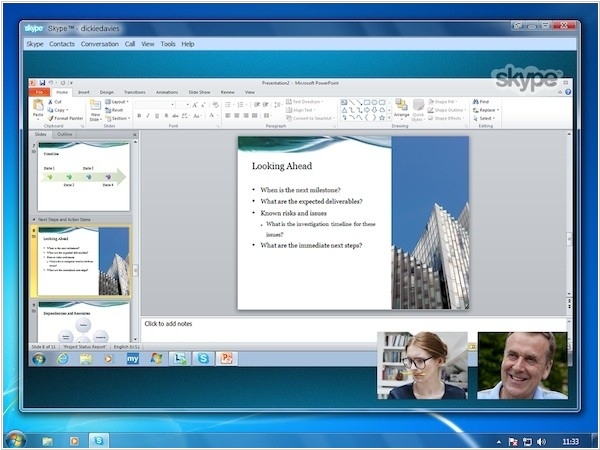
The latest release of Skype for Windows 5.8 is now accessible, introducing the capability for high-quality video calls in Full HD (1080p). However, to utilize this functionality, you will require an internet connection with a minimum speed of 2 Mbps and a specialized HD webcam capable of hardware video compression, such as the Logitech C920. Additionally, you can now share your screen or a specific application with a group of individuals, whereas previously, screen-sharing on Skype was limited to one-on-one calls. Please note that this feature is exclusively available in the paid version. However, the free version of Skype now enables video calls to your Facebook contacts, even if they haven't installed Skype. They simply need to open a web browser window with Facebook.
2011. Nokia and Skype not in a hurry to bring videochat to Windows Phone

Today in London, Nokia unveiled its first smartphones on Windows Phone (Mango) platform - Lumia 710 and Lumia 800. In general, they haven't disappointed anyone. Stylish, high quality, fast and reliable smartphones with pre-installed Mobile Office and Outlook, integrated to Exchange, SkyDrive, SharePoint, Office 365 - will surely attract business users. Of course, the price $580 (Lumia 800) - is not much different from the iPhone, but otherwise it has all chances to compete with iPhone and Android-devices. The only big cons - is that Nokia Lumia has no front camera, which means it doesn't support video chat, so important for business users. Why wasn't it installed? Nokia representative said that they simply had not enough time. But this is not the most shocking news about the video chat on Windows Phone. ***
2011. Skype opens App Store
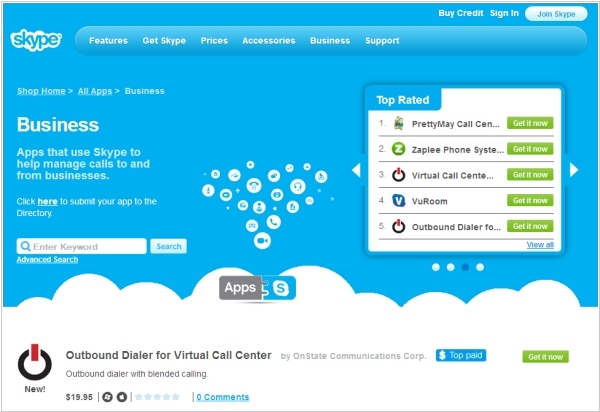
Skype is making a second attempt to establish a developer ecosystem around its service, following the less successful first attempt known as Skype Extras. The initial venture left a negative impression on developers when, in 2009, the company unexpectedly announced the closure of the Skype Extras catalog after its acquisition. Although the Extras remained accessible within the Skype client until now, users were unable to purchase them using Skype credits. The new application directory, called Skype Apps, replaces Extras in the Skype Tools menu. However, purchasing applications within Skype Apps using Skype credits is not possible. Instead, users must visit third-party websites to individually order each application. Notably, Skype Apps includes a dedicated section for business applications, encompassing call centers, call recording, screen sharing, faxing, and integration with other systems.
2011. Skype acquired group-messaging service GroupMe
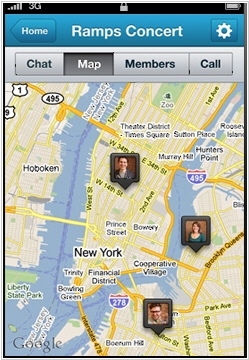
Mobile group-messaging services hit the social Web this year. Basically they are designed for communication and interaction with friends and family, but (as we know) such social technologies are rapidly find their way into Enterprise. One of such services GroupMe was yesterday bought by Skype for as much as $80 million. GroupMe allows to create a group and send text messages, photos to its members, start conference calls and share your location. For example, you send a message and all group members instantly receive it. Or you can call all them at once. Such a service could be useful for mobile work-groups, which need real-time communications. For example, equipment service companies. ***
2011. GoToMeetings adds HD-video. Goes apart from Skype?
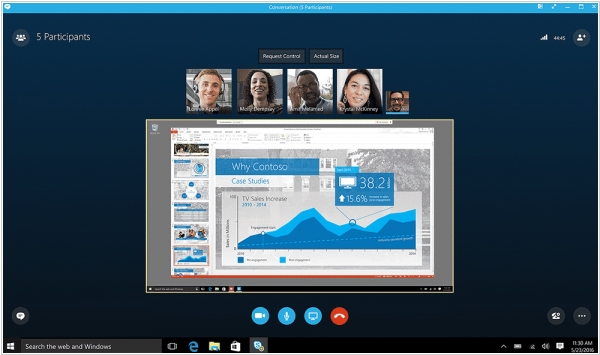
Last March, before Skype was acquired by Microsoft, it announced that the GoToMeating ***
2011. Skype as a Service - mission impossible

A couple of years ago, the IT world was excited with the idea of using Skype as a service - when any application, web-service, mobile client and any device could "talk" via Skype's network. This dream in theory came true last year when the SkypeKit SDK was launched in the closed beta. However, during the whole year SkypeKit SDK was actually used only by the couple of TV manufacturers and (perhaps) for Facebook integration. Earlier this month SkypeKit SDK was opened to all comers, but we still haven't seen any boom of new Skype-applications. And this time noone can blame Microsoft. ***
2011. Web video chat: Google Hangouts vs Facebook Skype

A great battle between Google and Skype (Microsoft) for the video calling market continues on a new platform - the Social Web. Last week Google launched (in Beta) their social network Google + and one of it's features is the group video chat Hangouts. And yesterday the built-in Skype-based video chat appeared in Facebook. Both video chat apps work directly in browser, which signals about the transition of video calling applications to web-technologies (although both apps require the installation of a small browser plug-in). ***
2011. Skype video chat is available on Android and Comcast TVs

Recently, we had a discussion about Microsoft's Skype and its upcoming plan to introduce video chat on the iPad, and now they have launched video chat on yet another competing platform - Android. However, at present, this feature is only compatible with a few Android smartphone models, namely Nexus S, HTC Desire S, Sony Ericsson Xperia Neo, and Sony Ericsson Xperia Pro. The reason for this limitation is the diverse specifications of Android devices, which has made it challenging for Skype to cover all of them within a short timeframe. The video chat functionality works over both 3G and Wi-Fi networks, similar to Skype for iPhone. Users can switch between the front and back cameras and make video calls from Android to Skype clients on iPhone, Mac, and Windows, or receive calls from them. Additionally, customers of U.S. cable provider Comcast will soon have the option to make calls from their smartphones to their televisions and vice versa. Comcast recently demonstrated what this capability will look like.
2011. Skype vs Fring on iPad

Fring was among the pioneers in releasing a dedicated messenger for the iPad back in 2010. They even attempted to encourage people to make calls through the iPad, just like they would on a regular phone. Now, Fring has once again taken the lead by introducing video chat for the iPad 2, along with group video support for up to 4 participants. The application offers optimized picture quality, functions over both Wi-Fi and 3G connections, and allows users to switch between the front and back cameras. However, it currently does not support making SIP calls to regular phones. On another note, a leaked video recently surfaced on the web, showcasing Skype's video chat functionality on the iPad (see below). Unlike Fring, Skype's iPad application is still in development. Nevertheless, it is a positive sign that following Microsoft's acquisition of Skype, they are continuing to develop their applications for competing platforms, including Apple's devices.
2011. Top 5 reasons why Microsoft acquired Skype
Last week, Skype again postponed its IPO. Then appeared the rumors that Facebook and Google are in talks to buy Skype. But today, suddenly Microsoft has acquired Skype for the record sum - $ 8.5 billion. With all respect to Skype - this is a very big sum. After all, Skype annual revenue is less than $1 billion and the net income is about $260 million. However, there are several reasons for Microsoft to overpay for this world's most popular messenger: ***
2011. Skype starts showing ads
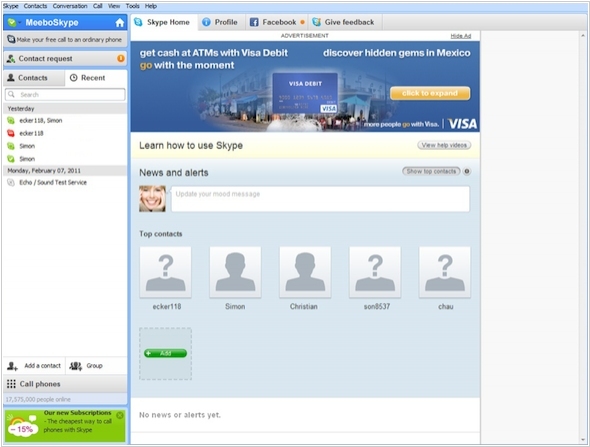
Now it becomes evident why the latest version of Skype features a homepage – it will serve as a platform for running banner ads. This advertising approach is quite reasonable, especially considering that previously, Skype executives had contemplated displaying banners directly within the video call window, even during free calls. However, the ads will only be visible in the United States, United Kingdom, and Germany. It will undoubtedly be intriguing to observe how Skype addresses the targeting challenge, as the effectiveness of online advertising hinges on aligning ads with user interests. Presently, Skype only possesses limited user information, such as location, gender, and age. In this regard, the recent partnership between Skype and Facebook holds significant potential, as the social network possesses a wealth of user data. It is possible that these industry giants will integrate their advertising networks to leverage this valuable information.
2011. Skype to add web-conferencing powered by GoToMeeting, not Webex
Recently Skype is intending to increase profits by expanding its business services. Skype already offers to business the VoIP service, IP-PBX integration and group video conferencing. And it would be very logical to add web-conferencing to this list, because many Skype partners (like Yuuguu, Yugma, Mikogo) are already earning on it. As known Skype almost 2 years ago added the screen-sharing feature. But it would be a shame to charge money for it. Firstly, it is the very basic implementation of screen-sharing without application selection, screen annotations, granting mouse control... Second, Skype's screen-sharing only works in one-to-one sessions and doesn't work simultaneously with video calling. So, finally, Skype has decided to pump-up and sell this feature and surprised everyone by announcing the partnership with Citrix GoToMeeting. ***
2011. Skype acquires Qik, makes group video calls paid

Skype is making significant strides this year. Shortly after launching the iPhone version with video chat, the company has made two important announcements. Firstly, Skype has acquired its competitor, Qik, a mobile video chat and video mail service for Android smartphones, for a sum of $150 million. This suggests that Skype for Android with video chat will be available in the near future. Secondly, Skype has introduced a paid Premium subscription, which includes a key feature: group videoconferencing for up to 10 people. The subscription is priced at $8.99 per month or $4.99 for a day pass. As a result, free group video calls are no longer available. Group video conferencing is also accessible in the Skype business version, costing $8.99 per month. It's important to note that only the user initiating the video call needs to pay. Mobile Skype users can also participate in group video conferencing, although without video capabilities.
2011. Skype for iPhone adds video chat

This year, a fierce competition is anticipated between Google and Skype in the mobile video chat market. Skype has taken the initiative by introducing the capability to make video calls in its mobile client, Skype for iPhone. Unlike the iOS native video chat app, Facetime, which is limited to iPhone 4, Skype video chat is available on iPhone 3G, iPad, and iPod Touch. Video calls can be conducted over both Wi-Fi and 3G connections, allowing you to make calls between smartphones and computers in both directions. However, group video calls are not yet supported. It is worth noting that Skype had previously added video chat to Nokia N900 in May 2010. Although Skype's representatives initially promised to release an Android app with video capabilities before the end of 2010, it seems that the addition of video was prioritized for the iPhone app for reasons unknown. Currently, other applications such as fring, Qik, Tango, and Yahoo Messenger also offer video calls on the iPhone.
2010. Skype develops web-version

We all have become used to the fact that Skype - is a program that is installed on computer. But perhaps, soon this fact will become a part of history. Different sources report that in the first quarter of the next year, Skype will release the web version. This is logical because Skype must respond somehow to the success of Google Voice, which works in the browser. True, like Google Voice, the web-version of Skype will use a proprietary browser plug-in, which still needs to be installed on your computer. Skype also needs the web-version for better integration in social networks. As we already reported, Skype plans to implement the second phase of Facebook integration and put "Call me" button on every Facebook user profile. Of course, it will be more convenient for users if they can make video calls via Facebook without launching another application. ***
2010. Skype 5.0 - Facebook integration, 10x videoconferencing
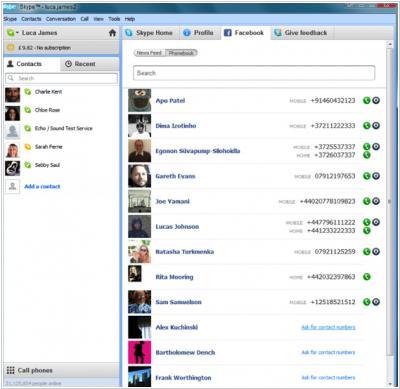
The new version Skype 5.0 for Windows is already available for download. It contains two super-features - Facebook integration and group videochat for 10 participants. Specifically for Facebook integration the Skype interface has been revamped - homepage with contact's status log and tabs has appeared. You can add Facebook as one of these tabs. It will display a list of all your Facebook-friends and you can click-to-call them via free videochat (if they have skype in Facebook contacts) or via SkypeOut. In addition, you can switch to the News Feed view and add posts and comments to Facebook right from your Skype. Unfortunately, Skype does not allow to communicate through Facebook-chat. What will be the result of combining half-billion Facebook user-base with the half-billion Skype user-base - we can only guess. ***
2010. Cisco's top manager to become Skype CEO

(Tony Bates, the new Skype CEO) ***
2010. Skype wants to be an Internet for unified communications
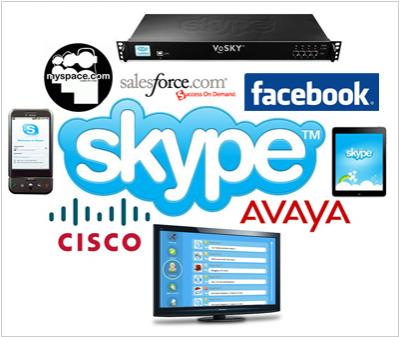
Recently we reported that Cisco may acquire Skype. However, judging by the recent announcements, this won't happen, and Skype has more ambitious plans than becoming Cisco's satellite. Today, Skype announced partnership with Cisco's main competitor - Avaya. We expected this a year ago, when Skype was sold to a group of investors led by Silver Lake - co-owners of Avaya. As a result of the partnership Skype Connect (formerly Skype for SIP), the service that allows PBX systems use the Skype's network, is already integrated in the Avaya solutions. I.e. Avaya will push it to its clients (perhaps for a certain fee). The next year the company plans to fully integrate Skype tools (video, conference, messenger, status) with its Unified Communications. However, this does not mean that Skype will turn against Cisco. Last year Skype and Cisco also implemented the same integration. ***
2010. Cisco may acquire Skype
According to several sources, there are reports suggesting that Cisco is considering the acquisition of Skype before the completion of its IPO process. If this speculation holds true, Cisco would significantly strengthen its position in the video and unified communications markets. Such an acquisition would bring together corporate and consumer communications, creating synergy that benefits both companies and their customers. Additionally, the closed protocol used for these communications aligns with Cisco's strategic approach and helps safeguard its market dominance. However, it is worth noting that the current co-owners of Skype, namely Silver Lake, are also co-owners of Avaya, which happens to be Cisco's primary competitor in the unified communications market. Consequently, they may not be inclined to support the formation of a powerful entity like "Cisco Skype." Nevertheless, the rumored price tag of $5 billion could be a compelling argument. It is worth recalling that Google had shown interest in acquiring Skype two years ago, but antitrust concerns likely deterred them from making a formal offer.
2010. Skype to create new products for business

Today Skype has filed an IPO registration statement and plans to raise up to $100 million in an initial public offering. Along with the IPO application Skype has published some of the their business stats and plan of its further development. It turnes out that the company is doing quite well. During the first 6 months in 2010 Skype has earned $406 million, that is approximately 25% higher the previous year. Nevertheless, taking into account that the Skype has already more than 560 million registered users (it's more than Facebook), the company's management wants to earn at least ten times more. In addition, they are worried that almost 90% of Skipe's income comes from a single service - SkypeOut. Therefore, the major objective of attracting new investments is the development of new paid of business applications. ***
2010. New Skype for iPhone: background mode, free calls over 3G
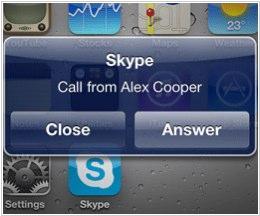
In an effort to restore its reputation following the incident with Fring, Skype has taken a positive step forward. This comes in the form of a new version of Skype for iPhone. Firstly, the updated client, compatible with iPhone 4 and iPhone 3GS, introduces multitasking capabilities, allowing it to operate in the background. Consequently, it is no longer necessary to keep the application open at all times when anticipating an incoming Skype call. Instead, a prompt, similar to the one mentioned above, will appear when a call is received. Moreover, users now have the freedom to access other applications while engaged in a Skype call. Furthermore, a noteworthy decision by Skype is the abandonment of additional charges for calls made over 3G networks. This change was prompted by the shift towards tiered pricing models by some mobile operators. Unfortunately, no specific timeframe has been disclosed regarding the introduction of video call support in Skype for iPhone.
2010. Microsoft adds Facebook and Windows Live Messenger to Outlook
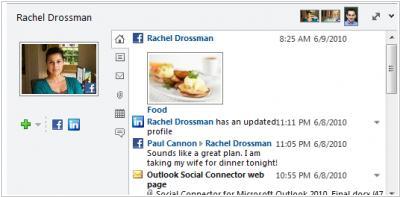
Microsoft has released an updated version of its social plug-in for Outlook, known as Outlook Social Connector. This latest update enhances the plug-in's functionality by enabling it to retrieve contact data from Facebook and Windows Live Messenger. Previously, the plug-in only supported LinkedIn, MySpace, and SharePoint by default. The purpose of the Outlook Social Connector is to provide users with up-to-date information about their contacts, allowing for a better understanding of their mood and interests. This is particularly valuable when engaging with customers. It's important to note that the plug-in can only display publicly-available information from social network profiles and currently only allows data retrieval, without the ability to post messages or statuses to social networks. Microsoft has indicated that the plug-in will soon integrate with certain local social networks, expanding its reach even further.
2010. Skype blocks Fring

As we have stated, mobile video calls are becoming the next big thing, and it seems, that Fring - is too small company to compete with such giants as Skype, Google and Apple in this market. Last week, Fring enabled making video calls on 3G for iPhone users. This new feature has become so popular that within a few hours after launch, Fring servers couldn't stand to load and Fring decided to temporarily disable support for Fring-to-Skype calls. In a few days Fring expanded its capacity, but Skype support has not been resumed. Today Fring blog has reported that Skype has blocked these calls and threatened to sue Fring. Quote from the blog: "They are afraid of open mobile communication. Cowards". ***
2010. Skype as a Service is now a reality

Following the promise made by Skype CEO, Jonathan Christensen, last year, the world's leading communication service, Skype, is now available to developers as a standalone service. The recently released SkypeKit SDK enables any software or device to utilize the Skype network for features such as instant messaging, status control, audio and video chat, all without requiring the installation of the proprietary client. Compatible with Windows, Linux, and Mac platforms, SkypeKit also incorporates the Silk codec, which serves as Skype's "VoIP heart" and was made accessible to developers a year ago. However, it's important to note that web applications and mobile applications are unable to utilize SkypeKit, which may be disappointing for some.
2010. It's official: Mobile Video Calls is the next big thing: Skype vs Facetime

A couple of weeks ago we suggested that Google is going to shift the video communications market (and win Skype), betting on mobile video calls. Today we can accurately say that very soon mobile video chat will become a huge market and the IT giants will fight for it. It's enough to watch the Facetime (iPhone 4 video chat) presentation to understand this. Since June 24 Apple will start selling iPhone 4 with the front camera and video over Wi-Fi in US, and it's obvious that to the and of this year millions of users will make video calls via the iPhone, and Apple will become the world's largest mobile video chat provider. But it will be only the short term win. Then Skype, Google and other players will join the fight. ***
2010. Skype 5.0 beta - Group Video Chat, end of Freemium
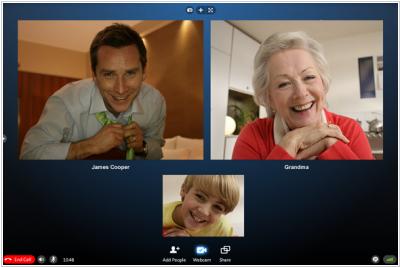
Today Skype has rolled out the new beta version for Windows which supports group video calls for up to 5 people. Skype 5.0 beta is now available for download and testing, but with the warning that it may contain a lot of bugs. Despite the fact that the first official screenshot of Skype group video chat shows a boy and a grandmother, it's likely that most of its users will be business employees. Because as soon as the testing finished, the group video chat will become a paid feature. At the same time, there already some free group video chat solutions (for friends and families) on the market, for example, TinyChat, TokBox, PalBee. On the small business market there are also some strong players with paid solutions - ooVoo, SightSpeed and HP SkyRoom. However, everything will depend on the cost and quality, offered by Skype. ***
2010. Skype comes to Symbian, Blackberry and Android. And to Verizon 3G network
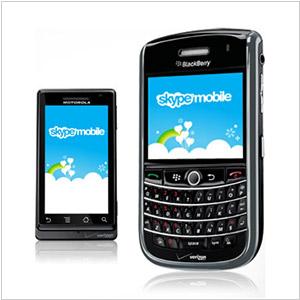
As you know, recently the U.S. operator AT&T allowed VoIP applications on iPhone to work over its 3G network. But the 3G version of Skype for the iPhone has not appeared yet. Today it became clear why. On the Mobile Congress in Barcelona Skype with Verizon presented there joint project. Specially for Verizon Skype developed mobile clients for some Blackberry smartphones, and Android smartphones by Motorola and HTC (still Skype worked only on Windows Mobile, iPhone and Nokia Maemo. Yesterday Symbian was added to this list). These devices (with preinstalled Skype) will let Verizon customers to make free Skype-to-Skype calls over 3G, chat and monitor the online status of their contacts. It also allows to make calls through SkypeOut - but only abroad (local US calls will be banned). ***
2009. Skype is now the most popular IM client
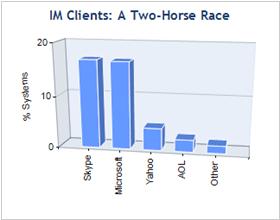
Recently all Skype news are about commercial wars and not about the new useful features. Nevertheless, its popularity grows day by day. According to exo.performance.network, Skype is not only the most popular VoIP service, but also the most widely used IM client (at least on Windows PCs). After chipping away at Microsoft's lead for weeks, Skype finally ***
2009. Skype to buy Gizmo5 and deploy SIP/Jabber?

Skype, that is struggling now against Niklas Zennstrom and Janus Friis, has two backup plans. The first - is to rebuild the back end themselves, and the second - is to acquire some existing technology. It turn out, that Skype moves in both directions. The company is hiring VoIP experts (like crazy) for their internal project, named Gecko. But this project is probably not progressing as quickly as Skype needs it to. Today multiple sources announced that Skype is in negotiations to acquire its little rival Gizmo5, that uses open protocols SIP and Jabber in its p2p VoIP network. The price tag is said to be in the $50 million range. ***
2009. Skype as a Service

After the bad news for third-party developers, Skype exec Jonathan Christensen hastened to make some remarks and give us a hope for a bright future. First, all plugins will work even after Extras close. Only users will not be able to pay for them from their Skype-accounts. But the developers will be still able to collect payment through other payment systems. Second, Skype is not going to kill the developer community and will soon introduce the next generation platform for them. And the most interesting part, is that talking to Michael Arrington (TechCrunch), Christensen noted that third-party developers will be able to create new solutions on the top of Skype services. What does it mean? ***
2009. Skype closes its developers ecosystem
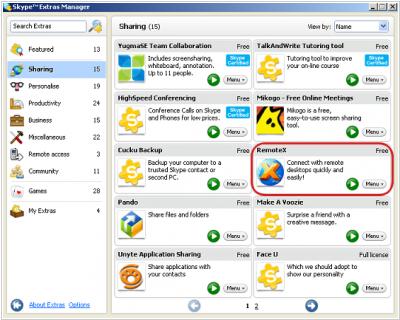
It seems that the new Skype owners prefer a shock therapy. Today they decided to close Skype Extras - add-on applications created by third-party developers. Today there are few hundreds of these add-ons in the catalog, and among them Pamela (for call recording), Skylook (plug-in for Outlook), Yugma (web-conferencing) and others. For some developers it was a primary business model. The official reason is that not enough customers where using and paying for these extras, so it's not profitable for company to support this ecosystem. ***
2009. Skype+Asterisk are now ready for business

Skype and Digium (Asterisk developers) announced the official release of the Skype for Asterisk connector. This solutions allows to integrate Asterisk IP PBX or Asterisk based telephony systems with Skype network: ***
2009. Skype released a new version of its client for Mac
The upgrade is truly impressive. The latest version introduces screen sharing capabilities within video chats, provides chat notifications for changes in your contacts' mood status, enables purchasing wifi connectivity at public hotspots using your Skype account, allows you to add notes to your contacts' profiles, and more. The screen sharing feature is available between any two users with video capabilities, and partial screen sharing is particularly elegant. This feature has been in development for a while and has the potential to disrupt both large and small competitors who have primarily focused on screen sharing. For far too long, screen sharing has been a challenging task, but incorporating it into Skype will greatly expand its accessibility to a significantly larger audience than ever before.
2009. Skype Adds Screen Sharing Feature
Finally, Skype has introduced screen-sharing capabilities to its Windows client, following its availability in the previous beta version of the Mac client earlier this year. Additionally, Mac users can now share their screens with PC users, bridging the platform gap. Skype's screen-sharing functionality is relatively basic, allowing users to share either their entire screen or select specific portions. While there were already third-party plugins available for screen sharing in Skype, many of them offered more advanced features, including white-board functionality. Unfortunately, it seems that screen sharing is limited to one-on-one conversations and not available for group contacts or Skype rooms. To access such functionalities, users will still need dedicated screen-sharing programs like Yuuguu.
2009. Skype is now avaliable for Blackberry
Skype has introduced a new "lite" version of its application for BlackBerry devices, providing users with various communication features. With this version, users can make free calls to other Skype users and also initiate calls to landlines and mobile phones using Skype Out. The application allows receiving inbound calls to an online Skype number as well. Instant messaging and SMS functionalities are retained, although features like voicemail and file transferring, available on other mobile platforms, will be delayed for BlackBerry. Unlike the iPhone version, the BlackBerry version of Skype does not require a Wi-Fi connection and can operate over the device's data plan. Skype plans to release a beta version of Skype for BlackBerry in May, starting with support for BlackBerry Bold and Curve phones, and gradually expanding to other BlackBerry models. Initially available in ten countries, including the U.S., U.K., Australia, New Zealand, Brazil, and parts of northern and eastern Europe.
2009. Skype client for the iPhone is now live in the US App Store
Skype for iPhone presents a visually appealing and highly faithful adaptation of the desktop version, boasting an intuitive user interface that is both straightforward and easy to navigate. It offers a range of delightful surprises, such as the ability to attach photos to contacts using the iPhone's built-in camera. Users can conveniently switch between all contacts and online contacts only, while adding new contacts is a hassle-free process. The crucial factor, of course, is the communication quality provided by the Skype app. While it is possible to make Skype calls over a 3G network with the beta 3.0 OS, this can lead to significant instability issues. Conversely, when using the latest official software, Skype performs well but restricts calls to WiFi connections only. While it is uncertain what lies ahead, it is likely that the next version will remove support for 3G calling.
2009. Skype makes friends with SIP PBX solutions
Skype announced that it will play nice with corporate PBX systems that use Session Initiation Protocol (SIP) such as Digium Asterisk. Skype for SIP product will be introduced as a beta product and will be tested by a limited number of companies. The new product will be targeted at small and medium-sized businesses and will connect the really broad user base of people that are already using Skype, with Asterisk. If you think about Asterisk as a very pragmatic and practical platform for telephony, for business phone systems, Skype has been incredibly successful in the Voice over IP space because it’s been a very pragmatic solution for customers to be able to use.
2009. Skype’s new speech codec will be available to third parties for free
Skype has introduced SILK, a cutting-edge voice codec, in the latest version of Skype for Windows. This codec significantly enhances call quality when both parties are using Skype versions that incorporate it. Now, Skype is offering the codec for third-party use on a royalty-free basis, even to its competitors. Despite the presence of other speech codecs in the market, such as iSac, AMRWideband, and Speex (an open-source codec), Skype asserts that SILK surpasses them all. By making SILK available to rivals, Skype aims to establish industry standards that facilitate the rapid adoption of VoIP services. This move also suggests that Skype is no longer overly concerned about competition, as they are providing competitors with a valuable intellectual property that can potentially reduce costs and enhance voice quality. Furthermore, it may indicate that Skype is preparing to open up its service in the future.
2008. Microsoft, Telefonica dial up Live Messenger VoIP
Telefonica, the leading telecommunications provider in Latin America, has been selected by Microsoft to offer voice over Internet Protocol (VoIP) services to Windows Live Messenger users in several countries. The service, called Voype, allows Windows Live customers to make calls from their PCs to any landline or mobile phone worldwide. With competitive rates and free calls between Live Messenger users, Microsoft's VoIP solution is positioning itself as a strong contender to eBay's Skype. Voype is currently available in select countries and will soon be expanded to Latin America. Although the service is still in its early stages and lacks the ability to receive calls on the PC, Telefonica plans to introduce this feature in a later phase.
2008. Skype 4.0 Beta: It’s All About Video
Skype is undergoing a significant and highly anticipated upgrade with the release of Skype 4.0, which the company's President, Josh Silverman, describes as the "biggest new release in Skype's history." This new software client, currently in beta for Windows users, offers a full-screen interface with a strong emphasis on video functionality. The redesigned user interface simplifies navigation and enhances the video chat experience, with features such as a prominent "video call" button, picture-in-picture functionality, and the ability to move the thumbnail displaying your video. Skype's peer-to-peer technology ensures high-quality video, leaving ample space for text chatting and file sharing during conversations. The video chat environment feels akin to being in a virtual chat room, and users can integrate videos from platforms like Metacafe and DailyMotion. While Skype supports up to 25 participants in voice calls, video chats are currently limited to one-on-one interactions. However, multi-party voice and text chats can be combined with video chats, allowing participants to hear audio from the video call. Another notable change in Skype 4.0 is the focus on conversations and managing them, whether they involve groups or individuals. The update enables contact imports from Outlook, Outlook Express, Hotmail, and Yahoo Mail, although Gmail integration is notably absent. Additional enhancements include automatic detection of new headsets and built-in microphone checks, along with software tools to assess audio and video quality. With 309 million registered users and $126 million in revenues during the first quarter, Skype 4.0 represents a step forward for the popular communication platform owned by eBay.
2007. Google Talk And Windows Live Messenger 9 Get Friendly
It appears that the various instant messaging (IM) programs have finally realized the need to consolidate, which users have been aware of for some time. Microsoft has made progress by enabling Live Messenger 9 (currently in private testing) to communicate with Google Talk, and they are also working on integrating AIM and ICQ. Considering that Live Messenger 8 already connects with Yahoo Messenger, we may be approaching the launch of a polished, officially released messenger hub. It raises the question of why it took the companies so long to pursue this. Trillian has been available for quite a while, although it doesn't facilitate communication between different IM platforms, it does consolidate them to reduce memory usage. Personally, I am delighted to see IM programs finally collaborating, as it becomes tiresome to have multiple programs open every day.
2007. Windows Live Messenger Takes on More Meebo-Like Features
Windows Live Messenger has introduced a new feature similar to Meebo by adding a badge to its service. This badge allows users to display their messenger status and receive instant messages without requiring the installation of Windows Live Messenger. Users have control over enabling the badge and can choose to receive messages only from known contacts. The badge, akin to a Skype status for web pages, can be placed on websites or blogs to indicate availability for chatting. The messaging widget enables anonymous chats or conversations using the sender's Windows Live ID, with safety precautions in place to restrict usage for children and FSS users. Notifications are provided when receiving messages from unknown senders, enhancing the chat tool's safety settings. Additionally, Windows Live Messenger has been focusing on API developments to integrate with third-party services, aligning with Microsoft's integrated approach for its suite of solutions, including Spaces. Although similar functionality exists in other chat tools like Meebo, these developments highlight the interconnected nature of Microsoft's offerings.
2007. Skype Launches its Device for Free Mobile Calls
Skype's mobile device, which was previously announced earlier this month, is now officially launching today in collaboration with mobile operator 3, starting with the UK, Australia, and Italy. The "Skypephone" will be offered for free with a contract or priced at £49.99 for pay-as-you-go customers. However, the phone currently does not support SkypeOut functionality, so users will need to utilize the phone's regular calling features for non-Skype calls. The Skypephone will have a dedicated button for making Skype calls, utilizing the device's data connection to enable calls over the internet instead of the mobile network. Calls to other Skype users will be free, although users should be aware of potential increased data usage depending on their wireless plan. Additionally, 3 will pay Skype royalties based on the number of users attracted to the phone. Qualcomm and Amoi Electronics are the manufacturers of this device.
2007. Salesforce Integrates with Skype
Skype and Salesforce have jointly announced the release of a new version of Skype specifically designed for Salesforce using the AppExchange program. Known as Skype for Salesforce, this integration brings Skype functionality into Salesforce's on-demand Customer Relationship Management applications, aiming to enhance productivity, streamline communication, and strengthen relationships with clients and colleagues. With the increasing popularity of Skype for both personal and business use, deepening its integration within Salesforce's services offers valuable benefits to users. The features of Skype for Salesforce resemble those of the regular Skype service, including free calls to other Skype users and the option for unlimited SkypeOut calling. Additionally, it seamlessly integrates with Salesforce's computer telephony adapter, enabling click-to-call functionality for phone numbers listed within Salesforce SFA applications. One particularly useful feature is the ability to display the user's record automatically when receiving inbound Skype calls from contacts listed within Salesforce, empowering Salesforce users to add notes, track activities, and reference them in the future. Model Metrics is among the pioneering companies to leverage Skype's new offerings within Salesforce. By integrating Skype into an enterprise solution like Salesforce, it becomes a more viable option compared to implementing VoIP as a replacement for traditional business phone systems. This approach addresses concerns that many businesses have regarding the adoption of VoIP, making it a strategic move for Skype to present its services through Salesforce's existing system.
2007. Skype adds new features to business-oriented service
Skype has announced the expansion of its Skype For Business package with enhanced features for centralized management and IT administration, along with optional add-ons. The internet telephony company, owned by eBay, initially introduced its enterprise offering in 2004 and launched it last year to expand its reach beyond the consumer market. With 30% of its global users now categorized as "business users," Skype has embarked on expanding its business services. The new features primarily revolve around internal management, including a more streamlined software installation process across multiple workstations and an expanded "business control panel" for administrators to manage SkypeOut calling minutes, assign phone numbers, and handle company-wide invoices. While many features in Skype For Business align with its consumer offerings such as video calling, text chat, SkypeOut for external calls, and SkypeIn for receiving them, the enterprise version boasts a separate home page and exclusive opt-in "extras" developed in collaboration with third-party companies. These business extras include screen-sharing tools, conferencing software, and call center services. These new features are part of Skype 3.0, launched in December, with previous marketing efforts mainly focused on the consumer market.
2007. Skype set to launch Skype Pro service
Skype is preparing to launch Skype Pro, a new version of its VoIP phone service tailored for international customers in 24 countries. Unlike the previous model that charged per minute for SkypeOut calls to landlines, the updated service will introduce a €2-per-month subscription fee along with a €3.9 cents-per-call connection fee. The new system brings several benefits compared to the old one, such as free Skype voicemail (previously priced at approximately $20 per year) and a significant discount on a SkypeIn number for receiving calls from traditional phones. Overall, it appears to be an attractive offering. In the United States, customers have enjoyed affordable, unlimited VoIP plans like those offered by Vonage and Comcast Digital Voice. Skype's recent introduction of a $15-per-year unlimited service in North America raises questions about international customers receiving a less favorable deal, especially considering the elimination of connection fees in the industry. It is only a matter of time before Skype recognizes this discrepancy.
2006. Skype 3 (still free)
Skype 3 has been released with some interesting new features, although none of them are groundbreaking. One notable addition is the "Live" tab on the Skype dashboard, which integrates Skypecasts into the main window. Users can join ongoing public discussions or start their own. If none of the conversations catch your interest, you can browse the directory for other options. Another significant addition is the "Do More" option under the Tools menu, offering various entertaining add-ons that enhance the Skype experience but are not essential. For example, users can invite contacts to play games like Chinese checkers or backgammon, or share a virtual whiteboard for doodling while chatting. There's even a feature called the KishKish Lie Detector that claims to analyze voice stress. While we haven't fully explored these new features yet, we're currently working on it and will provide a comprehensive review of Skype 3 soon.
2006. Yahoo! MSN adds Mac IM interoperability
On Wednesday, Microsoft launched Messenger 6.0 for Mac, enabling Apple users to connect with Yahoo Messenger users through their instant messaging software. This feature was previously available for PC users in July but was absent for Mac users until now. The updated software also grants Microsoft IM users on Mac the ability to create personalized emoticons and share their currently playing iTunes song with their buddies. The software can be downloaded for free from Microsoft's Mac website. Additionally, it is worth noting that the interoperability features of Windows Live Messenger and Yahoo Messenger for PC, previously in beta, have been officially released to the public on the same day.
2006. Skype releases video-calling beta for Macs
Skype has launched a beta version of its video call feature for Mac users, aiming to expand its community beyond Windows-dominated users. Skype for Mac 2.0 enables Mac and Windows users to make free video calls over the internet to other Skype users. While Skype has been working on a Mac video version for some time, it was not ready when the beta version of Mac OS X 1.5 was released in July, which only supported voice calls. Stefan Oberg, Skype's product management director, expressed excitement about bringing Mac and Windows users together for face-to-face communication. Although video calls to other Skype users are free, calls to traditional or mobile phones will incur charges. Users will need Mac OS X 10.3.9 Panther or later, with specific processor and memory requirements. In addition to the Mac 2.0 beta, Skype also released the final version of Mac OS X 1.5.
2006. Microsoft and Yahoo IM services to become interoperational
Users of Microsoft Windows Live Messenger and Yahoo Messenger with Voice beta now have the opportunity to participate in a beta program that allows them to communicate and exchange messages with each other. This marks a significant step towards interoperability between the major instant messaging services, eliminating the need for third-party applications like Trillian. Existing users will be prompted to join the beta test, while those using older versions can visit the respective websites to participate. This development opens up new avenues for seamless communication and connectivity between users of these popular messaging platforms.
2006. Net2Phone sues Skype
Net2Phone, an internet phone company, has taken legal action against Skype Technologies and its parent company, eBay, by filing a patent infringement lawsuit. The lawsuit was filed in U.S. District Court in New Jersey, alleging that Skype violated Net2Phone's patent, No. 6,108,704, which pertains to Voice over Internet Protocol (VoIP). Net2Phone was granted the patent in August 2000. This lawsuit comes at a time when the VoIP industry is witnessing the entry of numerous players, ranging from small startups to established internet service providers. Net2Phone claims that Skype, as a subsidiary of eBay, has infringed upon its patent related to "point-to-point Internet Protocol." The patent involves the exchange of IP addresses between processing units to establish a direct communication link via the internet. While Skype utilizes peer-to-peer technology for its VoIP service, other companies like Vonage and AT&T predominantly employ a centrally managed system to route calls to traditional phone networks.
2006. Microsoft launches Windows Live Messenger
Microsoft has introduced a public beta version of Windows Live Messenger, an instant messaging program that incorporates advanced features such as international PC-to-telephone calls with video functionality. With the PC-to-phone feature, users can make both local and international calls using a Verizon Internet telephony service, which now includes expanded coverage in Austria, Belgium, Finland, Ireland, Italy, and the Netherlands. Previously known as Verizon Web Calling, this service was limited to the United States, the United Kingdom, Germany, France, and Spain. In addition, Windows Live Messenger offers a unified contact list that integrates information from various applications. Users who have a broadband connection and a webcam can also take advantage of the video-calling capabilities within Messenger, enabling them to see each other during conversations. It's important to note that MSN Messenger, the predecessor to Windows Live Messenger, supports PC-to-PC calling with video capabilities and PC-to-mobile instant messaging, but does not include landline-calling functionality. Explore the new features and enhancements available in the beta version of Windows Live Messenger for an enriched communication experience.
2005. Microsoft to test new Messenger
Microsoft has commenced limited testing of Windows Live Messenger, an updated version that expands the capabilities of its consumer instant messaging software, including features for internet phone calls. The new iteration builds upon MSN Messenger, introducing a range of enhancements and transforming the program into a comprehensive communication platform. Although Microsoft initially declined to comment, enthusiast sites reported an imminent private beta release, with some even sharing screenshots of the software. Microsoft confirmed its plans, announcing a joint effort with MCI to enable Live Messenger users to make calls. The initial availability of the calling feature will be limited to the United States, France, Germany, Spain, and the United Kingdom, with access to over 220 countries once signed up. During the beta period, customers will receive one hour of free calling from MCI, with pricing details for additional time yet to be determined. MSN Product Manager Karin Muskopf stated that the beta testing would involve tens of thousands of users, with broader availability expected in the first half of the following year. The new version of Live Messenger incorporates folder sharing and an improved contact manager, with further features such as contact management and social networking integration planned for future releases.
2005. Yahoo and Microsoft IM: Can we talk?
Yahoo and Microsoft have unveiled a partnership aimed at achieving interoperability between their respective instant messaging (IM) services. The collaboration seeks to challenge the dominance of AOL's AIM in the IM market. Although the three companies have collaborated before, previous efforts focused mainly on corporate interoperability. The announcement, which was initially reported by the Wall Street Journal, has generated excitement among bloggers who appreciate the move towards greater compatibility and communication between different messaging systems.
2005. Intel dials up Skype support
Intel is partnering with VoIP giant Skype to optimize its software for Intel's upcoming dual-core processors. The collaboration aims to enhance audio quality and performance for voice-over-Internet-protocol (VoIP) networks. Intel's senior vice president, Pat Gelsinger, announced the partnership during his keynote at the Intel Developer Forum, highlighting the improvements in call quality and participant capacity. The financial terms of the deal were not disclosed, and Skype does not receive funds from Intel Capital. Skype's software has been downloaded over 150 million times, and the service currently works well on Intel computers. However, Intel wants to ensure seamless performance on its upcoming Centrino mobile platform, Napa. The collaboration will leverage Intel's technology to optimize the digital audio signal and enable wider audio frequency range for more natural and clear voice communication. This partnership follows Intel's similar VoIP development partnerships with Cisco and Avaya.
2005. Skype releases IM developer tools
Skype has introduced its developer tools, SkypeWeb and SkypeNet, allowing web applications and internet platforms to integrate Skype Instant Messaging into their services. By opening up its platform, Skype aims to expand its presence across the internet and compete with established instant messaging giants like AOL, MSN, and Yahoo. While Skype's free IM service is already available to its 51 million registered users, the company expects hardware and software makers to incorporate Skype IM into their products in the coming months. However, one limitation is that developers cannot incorporate Skype's Net phone features. Despite the challenges of voice quality and emergency dialing, Skype continues to leverage VoIP technology to offer calling features at a lower cost and aims to expand beyond PCs to traditional phone equipment.
2005. Skype embraces video phones
Niklas Zennström, the co-founder and CEO of Skype, believes that the company can attract billions of users by incorporating video phones into its services. During a demonstration at the AlwaysOn conference, Zennström showcased a beta video version of Skype, which is currently being internally tested. He aims to create an ecosystem and leverage external innovations to propel Skype's growth, envisioning it as a competitor to Google and Yahoo. While he did not disclose Skype's annual revenue, analysts estimate its valuation to be in the range of $6 billion to $10 billion. Zennström highlighted the company's affiliate program, partnerships with hardware manufacturers, and the utilization of computing resources to enhance the Skype user experience. However, the adoption of video telephony remains uncertain, as the cost of videophones needs to decrease for widespread consumer adoption. Skype's entry into the video phone market is expected to boost the industry's prospects, but it remains to be seen if customers will embrace video phones or be willing to pay for new videophone software.
2005. Skype rolls out premium services
Skype has expanded its popular internet phone application by introducing two new premium features: SkypeIn and Skype Voicemail. While these features have previously undergone limited testing, they are now available for widespread use across various operating systems, including Windows, Linux, Pocket PC, and Mac OS X. Notably, Skype's free software has recently surpassed 100 million downloads and boasts an impressive user base of 35 million registered users. With SkypeIn, users have the option to purchase up to three phone numbers in eight countries, including Denmark, Finland, France, Hong Kong, Norway, Sweden, the United Kingdom, and the United States. This allows individuals to receive calls from standard or mobile telephones at these designated numbers. On the other hand, Skype Voicemail fulfills its purpose by recording messages from callers, providing a convenient and efficient voicemail service.
2005. No-cost Skype strikes chord with businesses
Skype, the Internet telephony software, has made its way into the corporate world as businesses embrace it to reduce communication costs. While Skype has primarily been used for personal calls, an increasing number of corporate users are utilizing it for work-related communication. The software's popularity has soared in the past year and a half, with approximately 23 million users currently signed up for the service, a number expected to reach between 140 million and 245 million by 2008. Companies like Aruba Wireless Networks and Ruhrpumpen have integrated Skype into their communication systems, enabling employees to connect with colleagues and partners worldwide. Recognizing the growing business market, Skype plans to introduce business offerings with additional features like videoconferencing and user groupings. However, convincing businesses to pay for these services when the free version exists may pose a challenge. Nonetheless, business users are eager to explore the new offerings and compare them to existing alternatives, despite the allure of the cost-free option.
2004. Skype ready for both telephone worlds
Siemens has incorporated Skype's Net phone software into its adapter, allowing cordless phones to make calls using both the Internet and the traditional phone network. This combination of Internet and traditional telephony in a single device is currently uncommon but may become more prevalent as more calls shift to the unregulated Internet. Skype, a popular voice over Internet Protocol (VoIP) provider, is part of the wave of companies offering VoIP technology that utilizes the Internet for phone calls. By leveraging VoIP, any broadband connection can function as a home phone line, including cable, satellite, cell phone, Wi-Fi, or WiMax. The Siemens-Skype adapter stands out due to the reputation of its creators, with Siemens being a major phone manufacturer and Skype having over a million users. While VoIP initially gained popularity on PCs, the focus has now expanded to include personal digital assistants and cell phones. The Siemens Gigaset M34USB adapter, along with compatible Gigaset phones, is currently available in Europe at a price range of $65 to $260. To boost sales, Siemens offers the adapter bundled with 120 minutes of SkypeOut, a Skype service for making calls to traditional phones through an Internet connection. Skype calls made between PCs remain free, and the company has also introduced a method for developers to integrate Skype software into their applications.
2004. Skype readies business telephone offering
Skype, the popular Internet phone service provider, is planning to enter the business telephone market with a service targeted at individuals and work groups. However, winning over business customers will be a challenge as incumbents in the industry fiercely protect their customers and maintain loyalty. Skype, with its new peer-to-peer Net phone technology and limited resources, needs to build trust and credibility in the business sector. Skype co-founder Niklas Zennstrom acknowledged the need for partnerships with resellers, hardware makers, and consultants to support their entry into the business market. The details of the business service, including its launch date, are not yet disclosed, but it will leverage Skype's free software for web-connected PC calls and offer premium features like expanded conference calling and SkypeIn for receiving calls from the traditional phone network. Siemens is already working on a cordless-phone-like device for the business service. Skype's peer-to-peer architecture allows it to operate without significant infrastructure and capital investment, relying on its large user base to manage call traffic and ensure call quality. This unique approach has helped Skype differentiate itself in the competitive Internet phone industry while keeping costs low.
2004. Can Skype live up to the Net phone hype?
Sun Chun, initially skeptical about Skype's claims of free, high-quality Internet phone service, has become a believer after trying out the software. With over 22 million downloads since its launch, Skype is gaining momentum and disrupting the telephone industry. However, it still faces challenges, such as the need for both caller and receiver to have the VoIP software installed and the limitation of calls to PCs and niche devices. Despite these hurdles, Skype's peer-to-peer architecture and organic network growth make it a major contender. Skype aims to cooperate with traditional phone companies and plans to expand its services to mobile devices. Generating revenue remains a priority, and the company is exploring video conferencing and mobile phone integration.
2004. Skype releases Pocket PC software
Skype, a company known for its free Internet telephony software, has released its first application for personal digital assistants (PDAs), expanding the range of devices that can use its technology. The software allows users of Microsoft Pocket PC 2003 handhelds to make unlimited free Skype calls over Wi-Fi networks, which are commonly found in various locations. While only a third of Pocket PCs have Wi-Fi connections, the popularity of Skype could drive sales of these devices, according to Chris Shipley, executive producer of DEMOmobile 2004. Previously, Skype's software was only available for personal computers. Skype uses voice over Internet Protocol (VoIP) to enable phone calls over the internet, with calls being free between Skype users. The PDA software marks a further step in Skype's expansion, with an estimated 500,000 users making it one of the largest providers of free VoIP software.
2004. Skype takes VoIP software to the Mac
On Tuesday, Skype Technologies unveiled a beta version of its Internet telephony software designed specifically for Mac users, as it faces increasing competition in the VoIP market. The Mac OS X version of Skype includes the popular SkypeOut service, allowing users to make calls to traditional landlines and mobile phones worldwide at competitive rates. The launch is considered significant as it enables seamless communication between Skype users across different platforms. Currently boasting over 9 million users globally, Skype is a leading player in the rapidly growing Internet telephony industry. However, it faces challenges from both emerging startups and established telecommunications providers. AOL, for instance, confirmed its plans to launch its own Internet phone service next year, while AT&T is focusing on its CallVantage VoIP product. Cable companies are also entering the arena, with Time Warner Cable already offering VoIP services. Skype intends to release a full version of its Mac software before the year's end and is open to incorporating user feedback to improve the product.