 |
SharePoint is #1 in Top 10 Enterprise Portals
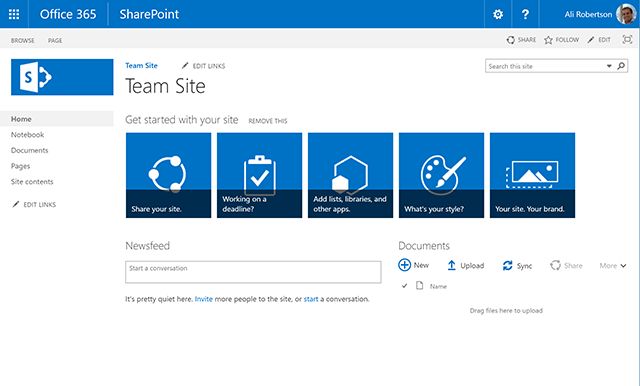
SharePoint's multi-purpose platform allows for managing and provisioning of intranet portals, extranets and websites, document management and file management, collaboration spaces, social networking tools, enterprise search, business intelligence tooling, process/information integration, and third-party developed solutions. SharePoint can also be used as a web application development platform.
Positions in ratings
#1 in Top 10 Enterprise Portals
#1 in Top 12 ECM software
Alternatives
The best alternatives to SharePoint are: OneDrive, Alfresco, Microsoft Teams, OpenText, Confluence, Box, Google Drive
Latest news about SharePoint
2018. SharePoint gets organization-wide news and content targeting
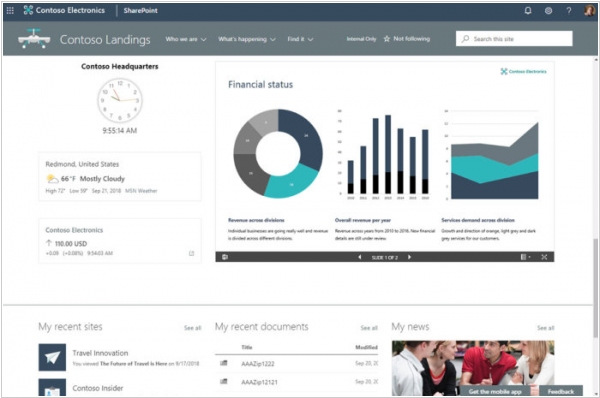
Microsoft has recently announced several enhancements for SharePoint and Office 365 sites, bringing new capabilities and functionalities. Among the notable updates is the introduction of a designated communication site that serves as the official news portal for the organization. This allows news posted on the portal to be easily identified with a special indicator, ensuring clear visibility on both mobile devices and the SharePoint home page. Additionally, a new feature enables the targeting of content to specific audiences based on their Active Directory (AD) Group membership, including dynamic groups. Moreover, SharePoint sites now have the ability to create mega-menus for navigation, facilitating improved user experiences and seamless site exploration. These advancements aim to enhance communication, personalization, and navigation within SharePoint and Office 365 sites.
2017. SharePoint 2016 finally added SharePoint Framework Support
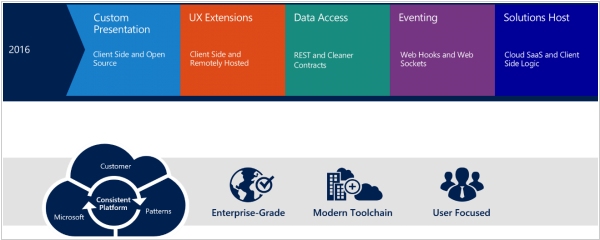
Microsoft's objective in launching SharePoint Framework into general availability in February was to attract a wider pool of developers to the SharePoint ecosystem. Now, with the introduction of SharePoint Feature Pack 2 (FP2), the company extends Framework support to users of SharePoint 2016. Framework serves as a page and web part model, offering comprehensive assistance for client-side SharePoint development, seamless integration with SharePoint data, and compatibility with open source tools. This release simplifies the process for SharePoint 2016 users and third-party developers to construct solutions centered around SharePoint.
2017. SharePoint Framework is generally available
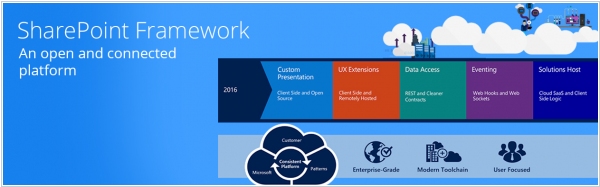
Microsoft has introduced the SharePoint Framework, empowering developers and administrators to construct and deploy components that are utilized by Office 365 users within their production environments. This advancement entails leveraging web technologies to create agile, responsive, and notably mobile-friendly applications on SharePoint. While SharePoint has served as an application and development platform for a considerable duration, the release of the Framework marks a significant stride in enhancing the developer experience. Historically described as unwieldy and challenging, the SharePoint Framework introduces improvements that address these concerns.
2016. Microsoft connects SharePoint Team Sites to Office 365 Groups
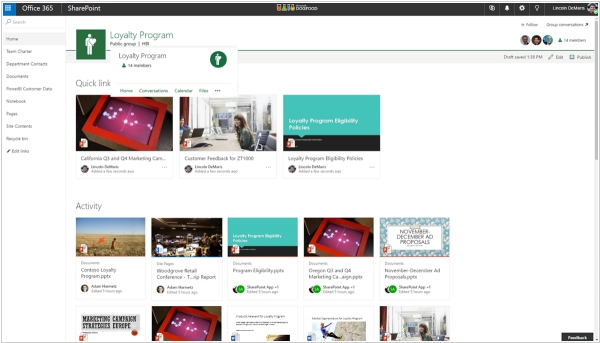
Microsoft is rolling out the integration of SharePoint and Office 365 team sites, introducing a new feature that enables the creation of interconnected SharePoint Online team sites within seconds. This integration simplifies the process as follows: Whenever an Office 365 Group is created, the service automatically generates a SharePoint team site. The appearance of the site can be customized by the team site administrator and includes various elements such as pages, lists, libraries, and team news. SharePoint team sites serve as collaborative spaces where teams can effectively communicate, share documents, and collaborate on projects. They are user-friendly and facilitate the creation of dedicated sites for each project undertaken by the team. Moreover, team sites are easily accessible across multiple devices, making them suitable for mobile workers as well.
2016. Microsoft released SharePoint for Android
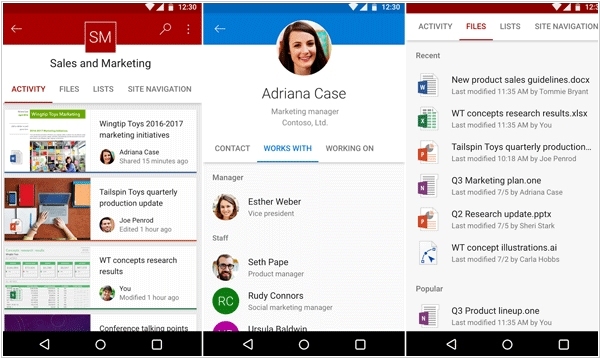
Despite Microsoft's withdrawal from actively competing in the mobile OS market for the past two years, the company has been notably sluggish in releasing Android apps. However, Microsoft has finally unveiled its SharePoint mobile client specifically designed for Android smartphones and tablets. This application offers users the ability to collaborate within team sites and access documents stored in SharePoint across various categories, including Sites, Links, and People. To utilize the SharePoint app, organizations must have an Office 365 subscription that includes SharePoint Online. Support for SharePoint Server 2013 and SharePoint 2016 will be incorporated at a later stage. Earlier this year, Microsoft released SharePoint mobile apps for iOS and Windows Phone, with the latter app still being in the preview stage.
2016. Microsoft brings SharePoint to iOS
Microsoft has introduced a new mobile application for SharePoint users, designed to provide access to a company's SharePoint-powered intranet portal and its content on smartphones and tablets. Initially available on iOS devices such as iPhones and iPads, the app will be extended to Android and Windows platforms by the end of the year, according to Microsoft. The app is compatible with both SharePoint Online in Office 365 and SharePoint Server 2013 or 2016 in on-premises or hybrid environments. It includes a Sites tab that enables users to visit their frequently accessed SharePoint sites, view recent activity, access files, lists, pages, and other content on those sites. Additionally, the app integrates with other Microsoft mobile applications, allowing seamless transitions between apps. For instance, clicking on an Office document in the SharePoint app will open the corresponding Office mobile app, while viewing a document library on a team site will redirect users to the OneDrive mobile app for iOS.
2016. SharePoint adds new document libraries
Now that SharePoint 2016 has arrived, Microsoft is gradually introducing SharePoint Document Libraries to its commercial Office 365 subscribers through SharePoint Online. These new document libraries represent a more user-friendly approach to SharePoint, allowing users to conveniently access documents, modify document metadata, and prioritize content within the document library. This development is significant as it addresses longstanding criticisms of earlier versions of SharePoint regarding usability challenges. Throughout the extensive lead-up to the release of SharePoint 2016, Microsoft pledged its commitment to enhancing the user experience.
2013. IBM kills Lotus. Microsoft kills SharePoint
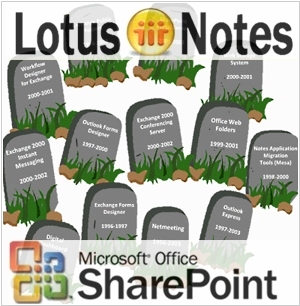
Perhaps the two most famous brands in the history of enterprise software, Lotus and SharePoint, will soon disappear. We mean brands, not specific products. Because by renaming their products, vendors try to erase the association with outdated technologies in customer brain. For example, Lotus appeared back in the 80-s years of last century. In 1995 IBM acquired Lotus Development and began selling their products Lotus Notes/Domino. In the following years most IBM collaboration systems moved under the Lotus umbrella. But last year the revolution occurred. The last child of the Lotus family - SaaS suite LotusLive was renamed to SmartCloud for Social Business. And then the name Lotus was removed from other products. The final nail was the recent launch of Notes/Domino 9.0 Social Edition (without Lotus). ***
2012. SharePoint 2013 will integrate Yammer, provide platform around the online version
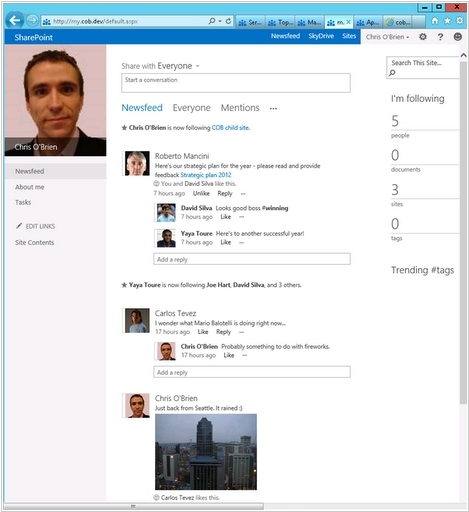
At the SharePoint Conference 2012 Microsoft revealed some new facts about the upcoming SharePoint 2013. But nothing specific has been announced - just few promises. The exact release date is also still unknown. Microsoft's corporate vice president of the Office Division Kris Koenigsbauer promises a launch during the first fiscal quarter of 2013, which falls between October 1, 2012 and December 31, 2012. Now about the Yammer. As expected, Microsoft will integrate this social intranet service (acquired in June) into SharePoint. The integration will be done via Yammer Web Parts and Yammer Open Graph. Got it? And soon (Microsoft says) SharePoint will become a system "powered by Yammer". Ok, let's look what is the real sense of integration between SharePoint and Yammer. ***
2012. SharePoint 2013 will include SkyDrive Pro
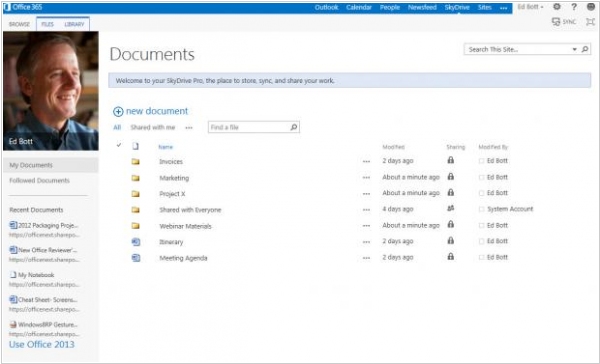
Together with Office 2013 Microsoft unveiled the beta version of SharePoint 2013. This is still an early version, and we won't review it so far (in particular, it's still no information about possible integration with Yammer). But one thing is this beta has already attracted great public interest - SkyDrive Pro. We have previously reported that SharePoint is being attacked by the army of file synchronization services called "Dropbox for Enterprise", and that SkyDrive's technology should help SharePoint to overcome these attacks. And so it happens, but as usual, Microsoft has added an element of chaos to this project. Why was it necessary to create a separate service called SkyDrive Pro? Why they just not added simple file sync functionality to SharePoint without inventing new titles? It's even more confusing as SkyDrive Pro won't replace the existing off-line client - SharePoint Workspace, but will be used along with it. ***
2012. Microsoft buys Yammer to protect SharePoint
Of course, it wasn't a secret that Yammer (the service that invented social intranet) - is a successful startup. But no one could imagine how successful it is. Microsoft is buying Yammer for as much as $1.2 billion. Most likely, it's too big price, but Microsoft has to overpay in order to protect its flagship product - SharePoint. We have already noted that after the rapid start, SharePoint has stopped in development. And lately two threats for SharePoint have appeared. The first threat is called "DropBox for business" - the new class of tools that sync files between computers and mobile devices. And the second threat - are these solutions for building enterprise social networks (Chatter, Yammer, Socialcast, Jive, etc.). For the first threat Microsoft has an answer - SkyDrive, but the social component in SharePoint it very weak. ***
2012. Microsoft SharePoint adds Firefox and Chrome support
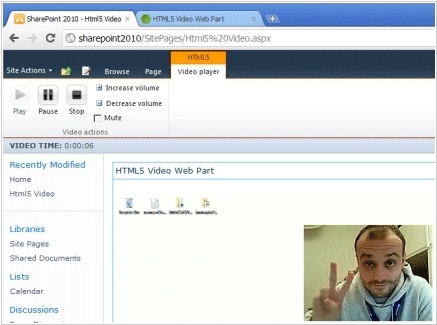
Recently, we observed a prolonged absence of news regarding the advancements of the renowned enterprise software powerhouse, Microsoft SharePoint, which serves as an intranet system. However, today we received noteworthy updates: SharePoint 2010 has finally introduced comprehensive support for third-party browsers such as Firefox, Chrome, and partial support for Apple Safari. The developers claim that previous limitations of these browsers prevented the utilization of the full range of features offered by the SharePoint interface. This is truly an impressive accomplishment by the SharePoint development team. Unfortunately, there is still no information regarding support for mobile platforms, excluding Windows Phone. However, there is mention of enhancements in the realm of social features. Jared Spataro, Microsoft's senior director of SharePoint product management, recently emphasized their diligent exploration of social networking technologies for fostering enterprise collaboration. Microsoft aims to augment the enterprise social capabilities within SharePoint. It appears that SharePoint is indeed undergoing a challenging phase.
2012. Dropbox for Enterprise will replace SharePoint?
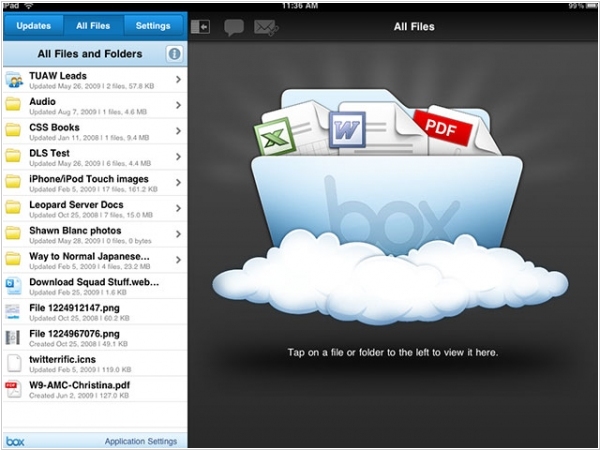
In this case by "Dropbox for Enterprise" we don't mean the business version of Dropbox. The fact is that the expression "Dropbox for Enterprise" has become a new meme. The largest enterprise software vendors want to release a product under the label "Dropbox for Enterprise". That's how they say: "We want to create something like Dropbox for Enterprise" (watch the video). Recall, Dropbox - is the super-popular file syncing and sharing service, which has already attracted 50 million users thanks to its simplicity and multi-platform support. It's business usage is limited due to the strict corporate security standards. But employees still tend to use it bypassing IT admins, and that is why the enterprise vendors are standing in the line to become the Enterprise Dropbox provider. ***
2010. Gartner tries to sort out the Enterprise Social Software market: Sharepoint vs Jive
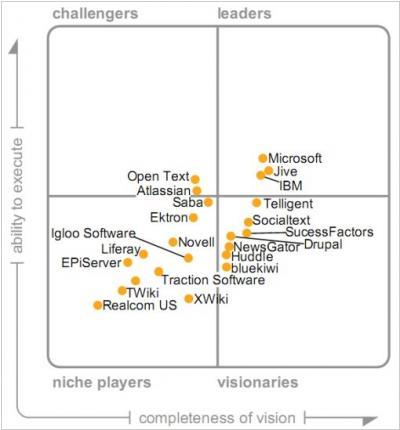
Gartner has published the Magic Quadrant for enterprise Social Software market 2010. In the previous similar report in 2009 the MQ reminded the Brownian movement of molecules because of the large number of vendors and approaches to the enterprise social tools. That's why Gartner decided to clarify its approach. At first, they split the Social Software for internal and external. The external was defined as Social CRM - and moved to the separate report. And this Magic Quadrant is focused only on internal social tools, designed for collaboration within enterprise. Additionally in order to mute the noise, Gartner introduced several restrictions. First, each vendor should have at least 100,000 end users. Second, each product should include the following social tools: ***
2010. SharePoint Workspace 2010: two tools in one
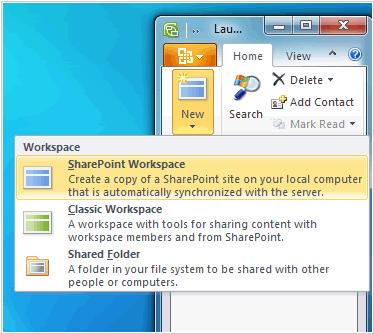
We have already mentioned that p2p collaboration app MS Office Groove was renamed to SharePoint Workspace and utilized as an offline client for Sharepoint. Now we have got the chance to see SharePoint Workspace 2010 in action and it appears that offline access to Sharepoint - is not the only function of this application. First, SharePoint Workspace can be used without Sharepoint - as well as MS Office Groove. I.e. you can create Groove Workspace (with files, calendar, discussions) and sync it with computers of co-workers or customers. However, the audio-chat and permission levels disappeared from the application. Recall that SharePoint Workspace is not sold as a part of Sharepoint Server, but as a part of Office 2010 Pro Plus. ***
2010. Sharepoint 2010: Clouds Can Wait
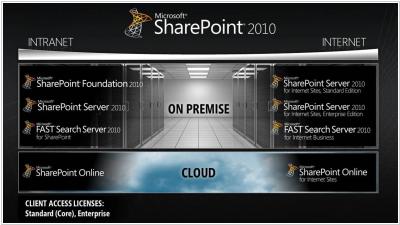
Last week together with Office 2010, Sharepoint 2010 was officially released. Of course, this is an important event for Enterprise 2.0 industry, however, not so important as we expected. Because despite the fact that Sharepoint 2010 was introduced as a cloud solution, at the moment neither Hosted, nor SaaS version of Sharepoint 2010 are not available. Hosted version (in BPOS-D) will be available only by the end of the year. SaaS-version (Sharepoint Online) by the end of the year will will be available for beta testing and official release is expected only in mid-2011. (We included Sharepoint Online in our Top 10 cloud platforms for Enterprise, but apparently that was too early). And now about the positive moments: Sharepoint 2010 really contains a lot of improvements that will strengthen its (almost monopolistic) position of the intranet platforms market: ***
2009. Microsoft to open Apps Marketplace for Sharepoint 2010
Microsoft has taken a revolutionary step by announcing the opening of an App marketplace for Sharepoint 2010, similar to Salesforce's AppExchange. Christian Finn, the Sharepoint product manager, revealed this exciting news, which means that the vast community of Microsoft-oriented developers will now have access to a substantial customer base of Sharepoint users. The App store will evolve from The Gallery, a resource within Sharepoint 2010 that currently serves as a central location for templates. It will be available for installation by both administrators and users, under the careful control of administrators. In addition to the App marketplace, Sharepoint 2010 brings several enhancements that will please developers. These include closer integration with Visual Studio 2010, improved support for Silverlight, new opportunities for integrating external applications and data sources through Business Connectivity Services, and a feature for optimizing large lists. This development ensures that Sharepoint 2010 provides a more comprehensive and developer-friendly platform.
2009. SharePoint Foundation 2010 – the new name for WSS
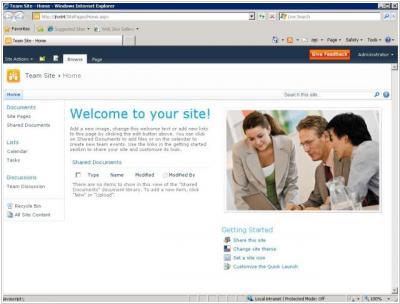
The suite of Web services for collaborative website creation, Windows Sharepoint Services (WSS), has undergone a name change and is now known as SharePoint Foundation 2010. The new version brings several changes and enhancements. For users, there is a new Ribbon interface, similar to Office 2007, which incorporates Ajax and Silverlight technologies extensively. This upgrade offers improved customization options, allowing the creation of branded sites. SharePoint Foundation 2010 is designed to be used alongside the upcoming Office 2010 and the new offline client, SharePoint Workspace 2010 (formerly Groove, which was previously part of MS Office). Administrators will benefit greatly from the new version, as it introduces a range of new administrative tools. These include the SharePoint Health Analyzer, which monitors the state of the Sharepoint server, a sandbox for websites, and Windows PowerShell, a new command-line interface. Developers, on the other hand, can leverage the power of Business Connectivity Services, which facilitates seamless integration between Sharepoint and other business applications.
2009. Project 2010 to become a part of Sharepoint
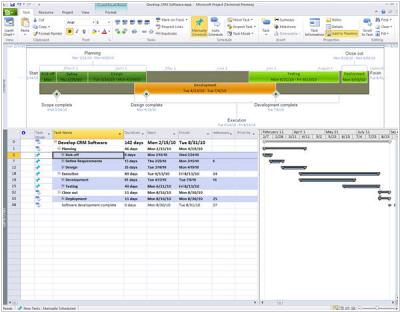
Today at the MS Project Conference in Phoenix Microsoft previewed the next generation of its project management system MS Project 2010. And the new version is quite interesting. It's generally known, that the main lack of MS Project is that it's not suitable for collaboration. Common users never understood its interface, and it never provided collaborative tools. Microsoft fixed this problem in its own way. First, MS Project will work only on top of SharePoint 2010 Server and will be integrated in it. So users will be able to create a project site (with Gantt Chart and task list) and easily share it in Sharepoint. Second, Project 2010 will be connected to Exchange Server and all the project tasks will be available in Outlook, Outlook Web Access and Outlook Exchange for Mobile. ***
2009. Microsoft Groove meets Sharepoint
Microsoft has announced a rebranding of MS Groove 2007, the software designed for online and offline collaboration and document sharing among small teams. The new name assigned to this software is Microsoft SharePoint Workspace 2010. This name alteration aligns with the product's evolving direction. Microsoft has frequently likened Groove to Outlook for Exchange. The objective behind SharePoint Workspace is to facilitate effortless access to SharePoint content, ensuring a smooth user experience regardless of online or offline connectivity. The Workspace will introduce a fresh array of scenarios explicitly tailored to enhance productivity.
2009. You Can Run Windows Sharepoint on Amazon Cloud, But Why?
Collaboration plays a crucial role in today's business landscape, and technology facilitates easier collaboration. Many businesses have traditionally relied on Microsoft's Windows Sharepoint Services for their collaboration needs, but I believe it is both excessively expensive and outdated. Previously, comparing Wikis to Windows Sharepoint Services would often lead to complaints about comparing Apples with Oranges, with critics emphasizing the powerful document management features of Sharepoint. While those criticisms were not entirely unfounded, the landscape has evolved, and now there are several Software-as-a-Service (SaaS) solutions that offer wiki-based collaboration with integrated document management options. With the inclusion of a wiki-like feature in Windows Sharepoint Services, it is now possible to make a fair comparison between Sharepoint and various vendor offerings such as Pbwiki, MindTouch's Dekiwiki, Socialtext, and others. This shift allows IT departments to consider wiki-based solutions as replacements for Sharepoint, considering cost considerations and other frustrations. Instead of a Sharepoint implementation, businesses have numerous options available, including on-premise implementations like MindTouch's Dekiwiki, Alfresco's open-source collaboration software, or on-demand SaaS offerings such as Pbwiki, Central Desktop, and more. These alternatives provide businesses with ample choices, eliminating the need to rely on expensive vendors. However, for businesses with inertia or specific requirements that necessitate Windows Sharepoint Services, it is still possible to implement it without significant investments in server and network infrastructure. By leveraging cloud infrastructure, businesses can achieve substantial cost savings on capital expenditures (capex) and instantly scale without delays or additional hardware resources. In October, Amazon introduced Windows EC2 instances, allowing users to run Sharepoint Services on these instances. This post offers a step-by-step tutorial on how to deploy Sharepoint Services on Windows EC2 instances, enabling Sharepoint enthusiasts to save costs during an economy impacted by recession.
2008. SharePoint To Run Enterprise 2.0?
Nine companies have recently launched Enterprise 2.0 offerings that integrate with SharePoint technology, highlighting the importance of maximizing investments in IT infrastructure. SharePoint, a robust Microsoft Server product, serves as a comprehensive portal for businesses, facilitating collaboration, document management, workflow automation, business intelligence, and more. While companies are interested in adopting Enterprise 2.0 applications, they are unlikely to abandon SharePoint. Instead, they seek to enhance its capabilities through integration with tools that provide social computing features. Notably, Awareness Inc., NewsGator Technologies, Atlassian, WorkLight Inc., blueKiwi Software, Connectbeam, Telligent Systems, Leverage Software, and Tomoye Corp. have introduced solutions that integrate with SharePoint, offering features such as social networking, community pages, secure information access, bookmarking, and collaboration across enterprise networks. These offerings empower businesses to leverage the power of SharePoint while incorporating Enterprise 2.0 functionalities.
2007. SharePoint goes solo, but why?
It's astonishing how Microsoft's SharePoint, a true gem, often goes unnoticed. While the market has readily embraced it, paying around $1 billion in license fees within its initial four years, its competitors have largely underestimated its potential as a threat. Some even choose to partner with SharePoint while it stealthily erodes their customer bases. Now, Microsoft is taking a step further by separating SharePoint from Windows Server. Although I wish there were sinister motives behind this move, it actually appears to be disadvantageous for Microsoft rather than advantageous. If SharePoint were set free from its ties to Internet Explorer, SQL Server, Windows, and IIS, becoming a collaboration portal compatible with other platforms, it would be a truly groundbreaking move. Unfortunately, that's not the case. To implement SharePoint, one still needs to fully embrace the entire Microsoft ecosystem. It's simply a separate download that remains exclusive to Windows. Microsoft stated that this decision was made to enable customers to conveniently obtain the technology while providing flexibility for the Windows SharePoint Services development process. They emphasized the WSS team's desire for more freedom in the development cycle, aligning with service packs, new releases, features, and bringing innovation to customers and other products built on WSS. It seems Microsoft grew weary of tightly coordinating SharePoint Services with Windows, which is understandable. However, if Microsoft were to further detach SharePoint from its ecosystem, allowing users to adopt it without fully embracing the Micro-borg, SharePoint's success would skyrocket (though its other products might suffer). In the meantime, for those who haven't recognized it yet, here's a clue: SharePoint is your competitor, whether you realize it or not.
2007. Microsoft does 'social computing' with SharePoint
Microsoft has embraced Web 2.0 technologies for businesses, as announced by Derek Burney, Microsoft's general manager of SharePoint tools and platforms, during his talk at the Enterprise 2.0 conference. Microsoft introduced a Web 2.0-style add-on called Community Kit for SharePoint, while enterprise RSS vendor NewsGator enhanced SharePoint's feed subscribing tools with tagging and an Ajax interface. The integration of Web 2.0 technologies in the corporate environment, known as "enterprise 2.0," has gained momentum over the years. Smaller software companies like SocialText and Jive Software have developed user-friendly alternatives to traditional collaboration tools, and large vendors like IBM are following suit with tools such as Lotus Connections. Microsoft already includes support for blogs, wikis, and MySite profiles in SharePoint, and the Community Kit for SharePoint builds upon these features with templates for improved blogs, enhanced wikis, and a tag cloud. Burney highlighted how Web 2.0 technologies facilitate customer feedback and idea generation, leading to product improvements. While Microsoft offers a comprehensive collaboration platform through SharePoint and Office, the question remains regarding their compatibility with non-Microsoft environments for collaboration with external partners and affiliates.
2007. Microsoft brings Excel online with SharePoint
Microsoft has introduced a web-based version of Excel, but it differs from competitors such as Google and Zoho in one significant aspect: it is closely integrated with SharePoint Server and Office 2007. The mention of an upcoming product competing with online spreadsheets like DabbleDB, Zoho, and Google Spreadsheets by Microsoft employee Tod Hilton sparked interest and discussion. Although Hilton later removed these comparisons from his blog post, his comments shed light on a relatively unknown product called Excel Services. While many have been questioning when Microsoft will offer a cloud-based version of its Office applications to keep up with competitors, it turns out they already have a solution. However, it primarily focuses on sharing spreadsheets within corporate workgroups and requires the use of Microsoft's SharePoint portal server and Office 2007. This information provides insight into a lesser-known aspect of Microsoft's product offerings.
2007. SharePoint 2007 improves content management, social tools, search, Outlook integration
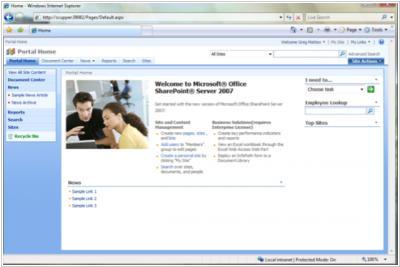
The new version of the enterprise portal solution MS Office Sharepoint Server 2007 (MOSS) is a web-based platform on top of Windows SharePoint Services 3.0 that Microsoft wants to make a front-end to all other company's server products, as well as to all other enterprise applications and data sources. One of the most important innovations in SharePoint Server 2007 - is integration between intranet and extranet. It includes the web-content management tools, that previously were part of Microsoft Content Management Server. The WCM and ECM functions are enhanced with InfoPath forms, built-in workflow-engine, improved search and new social tools - Wiki, RSS and blogs. ***
2006. WSS 3.0 includes Blogs, Wiki and RSS
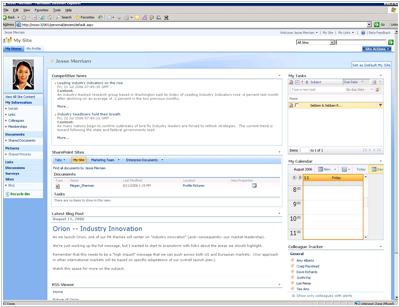
From today, the latest version of Windows Sharepoint Services 3.0 (WSS) is now available for download to all Windows Server 2003 users. WSS is a collection of Web-tools that are free of charge and enable the creation of intranet sites for collaboration and data access. WSS 3.0 incorporates popular social features like blogs, Wiki, and RSS, which are gaining popularity in the Enterprise world. Furthermore, this new version offers enhanced access control and version control systems, improved mobile access, and integration with the upcoming Microsoft Office 2007. WSS 3.0 is constructed on .NET Framework 2.0 and supports .NET Framework 3.0 Windows Workflow Foundation, allowing for workflow automation. Alongside the launch of Office 2007 (scheduled for January 30, 2007), a set of 40 templates for WSS 3.0 will be released. These templates will facilitate the rapid creation of intranet sites for various purposes such as HR, sales force, and project management teams.
2005. Microsoft to buy Groove Networks
Microsoft has announced its acquisition of Groove Networks, with Groove's founder, Ray Ozzie, set to assume the role of chief technical officer at the renowned software company. As part of the deal, Microsoft plans to integrate Groove's innovative "virtual office" collaboration software into its popular Office suite of productivity applications. Ozzie, a celebrated collaboration expert and the mastermind behind Lotus Notes, will directly report to Bill Gates, Microsoft's chairman and chief software architect. In his new position, Ozzie will join the ranks of three chief technology officers at Microsoft. His responsibilities will primarily encompass information worker software and collaboration tools, requiring him to split his time between Microsoft's headquarters in Redmond, Washington, and Groove's current base in Beverly, Massachusetts, just north of Boston. Gates expressed admiration for Groove's accomplishments in enhancing collaboration within Microsoft Office, while also highlighting Ozzie's profound expertise in areas like security, authentication, and peer-to-peer computing. This expertise is expected to be leveraged in other Microsoft products, including the highly anticipated Longhorn edition of Windows.
2004. Microsoft hones SharePoint update
On Thursday, Microsoft rolled out Service Pack 1, a significant update for its SharePoint collaboration products, which includes SharePoint Portal Server 2003 and SharePoint Services. This update introduces several enhancements, including the ability to save and share files up to 2GB in size, improved search features, and a revamped patching process for seamless updates. Originally designed as a corporate portal-building tool, SharePoint has evolved into a comprehensive suite of collaboration tools that facilitate remote teamwork on documents and various tasks. Integrated collaboration tools have been a key competitive advantage for IBM's Lotus division in its rivalry with Microsoft.
2004. Groove remodels its virtual office
Next week, Groove Networks is set to release the third major version of its collaborative software, now called "Groove Virtual Office," reflecting its use by dispersed teams. The update aims to facilitate information sharing for mobile and network-connected users. Groove has seen a shift in its software's usage, with businesses using it to extend existing systems with collaborative and mobile capabilities. The new version enhances integration with Microsoft's Windows utilities and introduces tools for application development. It includes features like forms-building, templates for common tasks, an alert system, and improved resource management. While the entry-level pricing remains at $69 per person, the higher-end versions have seen a 20 percent price increase, with the Professional Edition now priced at $179 per person and the project management version at $229 per person.
2004. Groove jumps to Microsoft beat
Groove Networks is set to commence testing a new version of its software aimed at facilitating collaboration among mobile workers and strengthening its ties with Microsoft. Groove version 3, expected to be finalized in the summer, introduces enhancements to the user interface and performance, offering tools to facilitate information sharing among employees and business partners. The software includes an add-on for Microsoft's Windows Explorer, allowing users to view and share documents and communicate via instant messaging. By closely integrating with Windows, Groove hopes to encourage greater adoption of its software. The peer-to-peer design of Groove enables direct communication between computers without relying on a central server. The upcoming version aims to enhance collaboration with external organizations, catering to the needs of businesses seeking efficient collaboration tools. The pricing structure for Groove version 3 remains consistent, with the client portion priced at $69 per person, the Professional license at $179, and the project management edition, called Team Direction, at $229.
2003. Sharepoint Portal Server 2003 becomes a part of MS Office
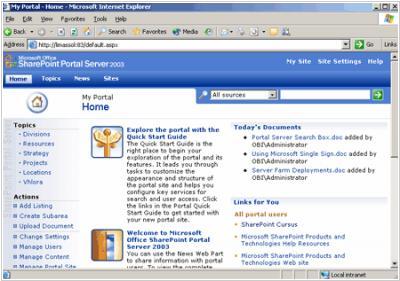
Today, along with the release of new MS Office 2003, Microsoft has released the new version of its enterprise portal software SharePoint Portal Server. Yes, Sharepoint Portal - is now a part of the Microsoft Office suite and has an official name Microsoft Office SharePoint Portal Server 2003. Interestingly, the lite free edition of this product Windows Sharepoint Services (WSS) has recently moved in the opposite direction - from MS Office to MS Windows Server. Microsoft reps explain that SharePoint Portal is a product and SharePoint Services is a technology. By the way, the new version of SharePoint Portal uses WSS as a platform (hence, it uses .Net Framework and MS SQL Server). As you may recall, the new version WSS 2.0, that was released this summer, added a lot of collaborative functions, so it's interesting what is the added value of SharePoint Portal. ***
2003. Groove wades into project management
On Monday, Groove Networks announced its collaboration with TeamDirection to resell their project management application alongside Groove's peer-to-peer collaboration software. The bundled offering, known as Groove Workspace Project Edition, combines Groove's document sharing and communication tools with TeamDirection's Project and Dashboard applications, designed to assist teams in task distribution and project tracking. The integrated products can be obtained from Groove for $199 per person. This partnership is part of Groove's ongoing efforts to establish a strong presence in the corporate collaboration software market. Earlier this year, the company downsized its workforce by approximately 20%, while simultaneously securing $38 million in additional funding from existing investors, including Microsoft, Intel Capital, and Accel Partners.
2003. Microsoft links SharePoint, FrontPage
On Monday, Microsoft revealed that it has combined two beta versions of its upcoming Office 2003 applications to facilitate the creation of corporate portals, which are internal websites used by companies to distribute information to employees. The integration enables businesses to utilize FrontPage 2003, a revised edition of Microsoft's web authoring software, to personalize the predefined page layouts provided in the Office SharePoint Portal Server 2003 package. These integration capabilities were included in the recent comprehensive update that Microsoft made accessible to Office 2003 beta testers.
2003. Microsoft included SharePoint Services in Windows Server 2003
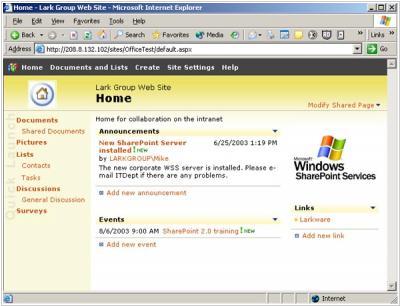
As promised, Microsoft made the new version of the web-collaboration extension SharePoint Team Services a part of is operating system (formerly it was bundled with MS Office). Accordingly, the name was changed to Windows SharePoint Services (WSS). The new version WSS 2.0 was recently released and is available for download as a free addition to Windows Server 2003. The main feature of the new version is that it's fully based on .NET Framework that greatly simplifies development of sites and business applications. Unlike its predecessor, WSS 2.0 uses SQL Server to store not only metadata, but also documents themselves. WSS 2.0 also provides tools to track document versions, share calendars, use messenger and create collaborative Web-sites without the need to involve IT staff. ***
2003. SharePoint shacks up with Office
Microsoft has announced that it will integrate its SharePoint business portal software into its Office System product line in an effort to boost its appeal to larger businesses as demand for desktop application software slows down. The move is part of Microsoft's strategy to position Office as an enterprise business tool and expand its capabilities beyond personal productivity. The integration allows users to create shared workspaces, access and share business documents, and collaborate on projects. Microsoft aims to make Office System a platform that supports custom applications and business processes. The company plans to release the new version of SharePoint Portal Server, called Office SharePoint Portal Server 2003, this summer. However, the integration of a server product into Office System may attract legal scrutiny, given Microsoft's previous antitrust issues. The move is part of Microsoft's efforts to enhance the value of Office and drive upgrades by adding new features from server software.
2003. Groove pockets Wintel dollars
Collaboration software company Groove Networks announced on Wednesday that it has secured an additional $38 million in funding from existing investors, including Microsoft and Intel Capital. The funding comes alongside a workforce reduction of 20%, with 58 employees being laid off, primarily at the company's headquarters in Beverly, Massachusetts. This funding brings the total investment in Groove to $155 million since its founding in 1997 by collaboration software expert Ray Ozzie. Groove's software enables peer-to-peer collaboration, allowing users to share data and work on projects without the need for servers. Microsoft has been closely involved with Groove since investing $51 million in the company in 2001, and the two companies have integrated their collaborative applications in the latest version of Groove Workspace. Despite the increased investment, Microsoft remains a minority owner of the company, with other stakeholders including Ray Ozzie, Accel Partners, and Intel Capital. Groove has not specified a target date for profitability but currently serves around 150 corporate customers.
2003. Groove adds Web services links
Groove Networks has released an updated version of its collaboration software, strengthening its ties with Microsoft and introducing compatibility with web services. The software allows users to create peer-to-peer networks and collaborate on projects by sharing data and documents. With version 2.5, Groove has integrated its workspaces with Microsoft's SharePoint Team Services and Outlook, enabling users to import information into Groove workspaces and treat it as an extension of their Microsoft portal or messaging software. Groove's collaboration tools can now also be accessed on devices other than Windows PCs through web services interfaces. The company plans to introduce web services versions of its chat, instant messenger, and forms tools in the future.
2002. Groove software to jive with Lotus Notes
Next week, Groove Networks will unveil an upgraded version of its collaboration software, Groove Workspace 2.1, which will feature integration with IBM's Lotus Notes and improved instant messaging capabilities. This release comes in tandem with Groove's introduction of a toolkit for developing collaborative applications using Microsoft's Visual Studio.Net. Groove's software facilitates the creation of peer-to-peer networks, allowing users to share data and collaborate without the need for servers. The Lotus Notes integration is both a significant move for Groove Workspace's functionality and a symbolic gesture, as Groove was founded by Lotus Notes creator Ray Ozzie. The upgraded software enables users to seamlessly transfer communications from their email inboxes or Lotus Notes databases into Groove's shared workspace. Additionally, the enhanced instant messaging capabilities aim to integrate communication technology into the collaborative process, eliminating the need for standalone instant messaging software. This comes at a time when more corporations are recognizing the importance of instant messaging in their operations. The Groove Toolkit for Visual Studio.Net highlights the growing partnership between Groove and Microsoft, following Microsoft's investment in Groove and their plans to support Microsoft's SharePoint Team Services. The toolkit allows developers to create and test Groove applications within Visual Studio.Net, aligning with Microsoft's .Net Web services strategy. However, Groove advises developers to consider this release of the toolkit as a preview version suitable only for pilot projects.
2002. Groove tightens ties to Microsoft
Groove Networks has announced its plans to integrate support for Microsoft's online collaboration technology into its upcoming applications. While both Groove and Microsoft's SharePoint Team Services emphasize online collaboration, Groove's approach involves desktop software, whereas Microsoft's service is primarily web-based. Groove, which recently released the second major version of its software, intends to introduce an update in the fall that will support SharePoint Team Services. A key feature of this integration will allow users to access and synchronize offline and online content, enabling them to work seamlessly even when not connected to the internet. Groove CEO Chuck Teubner stated that this solution addresses the need for secure collaboration across company boundaries. Founded by Ray Ozzie, the creator of Lotus Notes, Groove facilitates peer-to-peer networks for data sharing and project collaboration. Microsoft's SharePoint Team Services also focuses on collaboration but emphasizes web-based or client-server approaches. Following Microsoft's $51 million investment in Groove, the partnership between the two companies has grown stronger.
2002. Groove updates peer-to-peer software
Groove Networks, a peer-to-peer software specialist, is set to release a new version of its collaboration and instant messaging software, Groove 2.0. The software includes features for integration with Outlook email, improved support for Microsoft Office, and new server tools for business users. Founded by Lotus Notes creator Ray Ozzie in 1997, Groove Networks has gained support from major backers such as Intel and Microsoft, who invested $51 million in the company last year. Groove's software offers a streamlined approach to peer-to-peer file sharing and collaboration, tailored to meet corporate needs. The latest version introduces an "Outlook onramp" tool for converting email attachments into shareable documents, as well as enabling group editing of documents, presentations, and meeting scheduling. The standard edition of Groove 2.0 will be priced at $49, while the professional package will cost $99. Groove has formed partnerships with software companies like Microsoft, Documentum, and Autonomy, which analysts see as crucial to its success in the market.
2001. Groove swings $51 million from Microsoft
Microsoft announced on Wednesday that it has made a $51 million investment in Groove Networks, further solidifying its strategy of enabling file and data sharing through web-based collaborative software. Groove Networks, a private company based in Beverly, Massachusetts, has developed software that resembles Napster in its approach to sharing files, ideas, and data. This investment is expected to play a significant role in Microsoft's .Net strategy, which aims to move business computing applications to the web. With this minority stake in Groove, founded in 1997 by Ray Ozzie, the creator of Lotus Notes, Microsoft aims to streamline the integration of Groove's software with its Office suite, Windows XP, and messenger applications, as well as various initiatives related to XML-based web services and other .Net technologies. By collaborating closely, Microsoft and Groove Networks hope to compete against IBM's dominant collaborative software, Lotus Notes, while finding the right balance between web-based software and desktop applications. The companies will jointly work on sales and marketing efforts to accelerate the adoption of their technologies, although specific product plans resulting from this investment were not disclosed. While the investment aligns Groove Networks closely with Microsoft, it does not restrict its compatibility with other instant messaging services or media players, according to Ray Ozzie.
2001. Microsoft unveiles enterprise portal SharePoint Portal Server
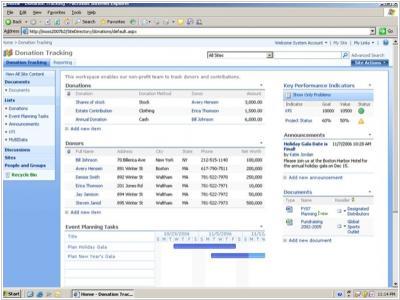
Following the launch of the free MS Office extension for developing internal collaborative web-sites, known as SharePoint Team Services, Microsoft has introduced a comprehensive enterprise portal called SharePoint Portal Server 1.0, which is a paid offering aimed at competing with similar solutions from IBM and Oracle. SharePoint Portal Server empowers organizations to establish internal portals that facilitate collaboration and data access from both local and external sources. The portal encompasses a range of tools for document management, search functionality, and the creation of sites using Web Parts technology. It utilizes the IIS web server and the Web Storage System (WSS) database, which is also employed by Microsoft Exchange. Users can conveniently access the portals through a web browser. In contrast to SharePoint Team Services, the portal delivers more advanced capabilities for document management, version control, workflow management, search functionality, access control, and website creation. SharePoint Portal Server primarily targets medium and large companies, with a licensing cost of $6,999 for a 25-user license.
2001. SharePoint Team Services - Web-style intranet collaboration
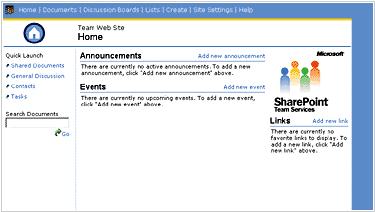
Today, Microsoft has unveiled a new version of its office suite Office XP, which includes an interesting tool for intranet collaboration - SharePoint Team Services. However, this is not a completely new technology but a new name for the Office Server Extensions package. But unlike its predecessor, SharePoint Team Services is a web-based application that works not in Outlook but in Internet browser. Sharepoint Team Services allows you to create an intranet or extranet sites for collaboration and data access. To simplify the site creation it uses the Web Parts technology that we have already mentioned. Sharepoint Team Services contains templates for standard pages: Document Library, Custom List, Survey, Discussion Board, Links, Announcements, Contacts. ***
2000. Groove pushes sharing ideas on the Net
Groove Networks has unveiled its software solution for collaborative Internet-based work. The software integrates various computing concepts that have circulated on the Internet for years, including home and corporate video conferencing, file sharing of music, videos, and photos, and instant messaging and chat functionalities, among others. Rather than requiring consumers and businesses to use multiple products for these activities, Groove consolidates all these functions into a single comprehensive product. Groove plans to offer the product to individuals and consumers as well. The company envisions a scenario where families can easily share gossip, photos, music, and other information, even when separated by long distances. The software establishes a shared space on a computer, allowing files to be shared with other Groove users across corporate networks or the Internet. This approach bears similarities to Napster's method of sharing music files, where the files are stored on individuals' PCs but accessed through the company's software, which connects to a central server.
2000. Microsoft Web Parts make it easy to create internal portals
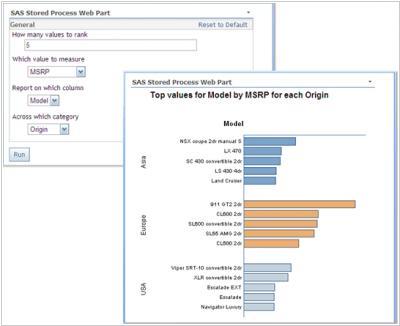
Microsoft has unveiled a new technology called Web Parts for SharePoint Team Services (formerly known as Office Server Extensions). SharePoint Team Services allows companies to build internal websites that aggregate data from both internal and external sources, and these websites can be viewed within Outlook. The introduction of Web Parts technology greatly simplifies the process of creating such sites. A Web Part refers to a block of a web page that can be reused across multiple sites. This enables the utilization of pre-existing blocks, developed by Microsoft or other companies. For instance, a customer relationship management (CRM) developer can create a web part specifically for their CRM system, which customers can easily insert into their web pages. Portal users have the flexibility to select the desired parts and arrange them on a web page. The exchange of data between the web parts and third-party applications and data sources is facilitated through XML-based communication.